Drones in Oil and Gas: What the Industry Looks Like and What It Means for Students
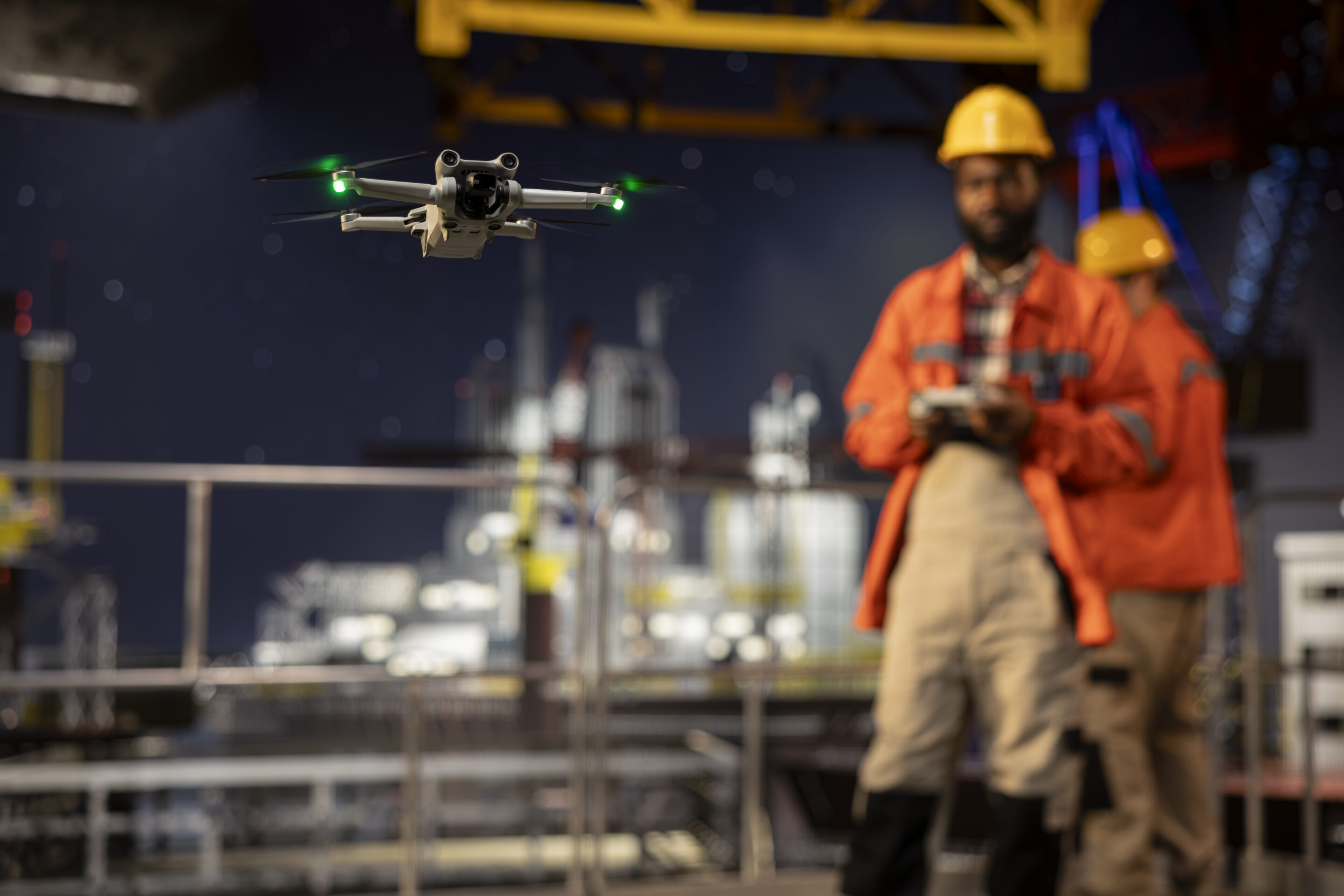
The United States has over 2.5 million miles of pipelines, and every mile needs regular inspection, which is one reason the use of drones in oil and gas is growing at a compound annual growth rate (CAGR) of more than 24%, according to Mordor Intelligence. Companies across the energy sector are adopting the technology fast, but qualified operators aren’t keeping up with demand.
For Career and Technical Education (CTE) coordinators advising students on energy careers, that gap is an opportunity worth knowing about. This article covers how drones are used in oil and gas, what roles exist, what qualifications employers require, and how students can build that foundation now.
Key Takeaways
- The U.S. has over 2.5 million miles of pipelines that need regular inspection, and drones have become the standard tool for covering that ground safely and efficiently.
- The oil and gas drone market is projected to reach $17 billion in 2026, but the supply of qualified operators is not keeping pace with demand.
- FAA Part 107 is the legal baseline for commercial drone work. Oil and gas employers also require manual flight skills, thermal imaging experience, and the ability to produce inspection reports engineers can act on.
- Students don’t need prior energy sector experience to enter oil and gas drone careers. Companies hire for flight proficiency and data collection ability first.
- Drone certification complements existing CTE energy pathways. A student already pursuing welding, environmental science, or industrial systems can add drone skills without switching tracks.
How Oil and Gas Companies Use Drones
Every use case below represents a job. When your students understand how drones are used in the oil and gas industry, they understand what employers in one of the largest industries in the country are hiring for.
Pipeline Inspection
Drones for pipeline inspection have become a standard tool across the energy sector. Pipelines stretch across hundreds of miles of remote and hazardous terrain, and drones with thermal cameras detect heat anomalies, methane leaks, and structural damage along the corridor without sending crews into the field. A crew that once spent days walking that same corridor gets the same data from a single flight.
Facility and Asset Inspection
Drone inspection in oil and gas facilities covers refineries, storage tanks, flare stacks, and offshore platforms that require regular monitoring. Drones access elevated structures and confined spaces that would otherwise require scaffolding or rope crews, so operators get the inspection data they need without shutting down the facility.
Environmental Monitoring
Oil and gas companies operate under strict emissions and spill regulations across large production sites. Drones with multispectral and thermal sensors cover wide areas systematically and produce the time-stamped documentation operators need for regulatory reporting.
Site Surveying and Mapping
Before a well is drilled or a pipeline is laid, operators need precise terrain data. Drones capture aerial imagery that photogrammetry software stitches into detailed 3D terrain models. Operators use those models for drilling site planning and right-of-way assessment.
Fixed-wing drones, which look like small planes and cover large distances efficiently, handle large-area surveys while multirotors, the four-armed drones most people are familiar with, cover tighter, more detailed sites.
The Workforce Gap That Makes Drone Skills Valuable in Oil and Gas
Drones have become standard tools across energy careers, and students who understand how to use them enter the workforce with a skill most candidates in the same field don’t have. A student who graduates as a pipeline technician, an environmental compliance specialist, or a facilities engineer will find that understanding how drones in oil and gas are used makes them more valuable to any employer in the sector.
The oil and gas drone market is projected to reach $17 billion in 2026, according to Mordor Intelligence, which means the demand for qualified operators is only growing. For students already planning energy careers, adding drone certification puts them ahead of candidates who show up with the same coursework and nothing else.
What Qualifications Do Oil and Gas Drone Operators Need?
The Federal Aviation Administration (FAA) Part 107 commercial drone license is the legal baseline for any paid drone work in the United States, but employers in oil and gas aren’t just looking for someone who passed a written test.
Passing the Part 107 exam means a candidate understands airspace rules. Oil and gas employers need someone who can also fly manually when GPS (Global Positioning System) fails in a remote location and produce inspection reports that engineers can act on. Logged flight hours and a documented portfolio close that gap.
A qualified drone operator in oil and gas brings a specific set of field skills beyond the certificate:
- Manual flight proficiency: Operating without GPS or sensors in field conditions where signals fail.
- Thermal imaging and data collection: Capturing useful data with specialized payloads, not just flying and recording.
- Mission planning: Mapping a flight path, checking airspace, and preparing for conditions before leaving the ground.
- Safety awareness: Understanding OSHA (Occupational Safety and Health Administration) requirements and hazardous environment protocols specific to drones in oil and gas operations.
- Communication and reporting: Translating UAV (Unmanned Aerial Vehicle) inspection data into reports that engineers and managers can act on.
Students with logged flight hours, a video portfolio, and field experience can speak to every one of those requirements in an interview.
How Rocket Drones Helps Students Develop Drone Skills for Oil and Gas
Rocket Drones is a drone education company that offers curriculum, hands-on flight training, certification preparation, and a career pathway framework built around the skills real industries hire for.
We help schools integrate drone technology into CTE, STEM, and other classroom programs for grades 3 through 12. Students heading into energy careers graduate with a certificate, logged flight hours, and a portfolio they can show any employer.
FAA Part 107 Certification Training
We prepare students aged 16 and older to sit and pass the FAA Part 107 exam, the commercial drone license required for any paid drone work in the United States. The exam covers airspace rules, weather conditions, flight planning, and safety.
Employers in the oil and gas industry treat it as the minimum bar before they’ll consider a candidate, which makes it the credential students need before anything else.
Hands-On Flight Training and Portfolio Building
We qualify students with a portfolio and logged flight hours so they graduate as complete pilots. Our program trains manual piloting without GPS or sensor assistance, the exact capability oil and gas employers require in remote terrain and signal-degraded environments.
Students graduate with documented proof of their skills, giving them a concrete advantage over candidates who only have a written certificate.
Curriculum That Fits Existing CTE Pathways
Our drone curriculum is built to complement existing energy and manufacturing pathways. A student already pursuing welding, environmental science, or industrial systems has the technical foundation that makes drone skills a natural fit.
Instructor training is built into the program, which means any CTE educator can integrate drone certification into their existing classroom without starting from scratch.
Drone Certification Gives Your Students a Hiring Edge Before They Graduate
As oil and gas companies make drones part of their daily operations, demand for trained operators will keep growing. Students who enter the workforce with practical drone skills, like pipeline inspection, thermal imaging, data collection, and manual flight proficiency, stand out over candidates with the same coursework and no field experience
We help students from grades 3 to 12 develop hands-on drone skills with a documented portfolio. We offer curriculum, real flight hours, and scenario-based training integrated into your existing CTE pathways.
Contact us to see how Rocket Drones fits into your existing CTE energy pathway without adding a new course.
Frequently Asked Questions
What types of drones are used in oil and gas?
Do oil and gas companies hire drone operators directly?
Can students enter oil and gas drone careers without prior industry experience?
How do drones inspect oil and gas pipelines?
Can drone certification fit into an existing CTE energy pathway?
Nationals 2026
is around the corner.
Aerial Perspectives Podcast

Discover the exciting world of drones with Aerial Perspectives! Each episode takes you behind the scenes with drone pilots from diverse industries–cinematography, construction, inspection, agriculture, and more.


