Episode 7: Aerial Perspectives - Drone Fishing Rescue: Saving Lives from the Sky
Guest: Andrew Smith, Drone Fishing Enthusiast, Pensacola FL
Host: Chris Tonn
---
00:00:00 Chris Tonn: Well, welcome back to another episode of Aerial Perspectives. I'm your host Chris Tonn, and we've got a very, very special guest today—Andrew Smith out of Pensacola, Florida—who was recently highlighted in multiple news outlets for being one of the first civilians captured on film to rescue someone that was drowning on the beach with a drone. A fishing drone, no doubt, and we want to talk about it. So thank you for coming on the show today.
00:00:28 Andrew Smith: Thank you for having me. So yeah, it was crazy.
00:00:31 Chris Tonn: Oh, I can only imagine. I want to hear a little bit about how you got into drone fishing and how this all started. Just back it up a little bit and tell me—when was the first time you said, "Hey, I think I want to do drone fishing"? Or was it before drone fishing? Were drones a general interest?
00:00:49 Andrew Smith: No, shark fishing. You gotta get the baits out there. You can't cast—most people use kayaks. And in January, when it's that cold out, my friend showed up with a drone and I was like, "Heck with this kayaking." So I actually, honestly, I had to get a personal loan because I'm terrible with money—it's $3,000. But after I got it, it completely changed fishing for me. And now you can't go out to the beach without seeing at least one other of these drones. They've completely taken off.
00:01:24 Chris Tonn: No pun intended! Now, is that something that you found yourself using more for shark fishing? Was it a variety of fish that you utilize it for? Where's the main focus on the fishing?
00:01:42 Andrew Smith: Just shark fishing, yeah. Sometimes we've tried to catch like redfish and stuff with it, but when you're flying it, you have to make sure the line doesn't go into the prop and stuff. And it's not worth the potential wreck to catch redfish. The only time we use it is to get the baits out. We usually go like three to six hundred yards.
00:02:01 Chris Tonn: Nice, nice. And is it something that you do more at like a sunset or morning hour? When's the go-to time?
00:02:11 Andrew Smith: It depends on the time of year. When it's cold, great whites are around—the meat fish. And we'll be out there from Friday to Sunday.
00:02:19 Chris Tonn: So you've been doing this for two years now as a drone operator. Have you felt yourself enjoying it more, getting deeper down the rabbit hole? What's kind of the progression over the last two years?
00:02:34 Andrew Smith: I wrecked the drone like two months ago, and I didn't even want to fish anymore really, because it's just so much easier. You can get five baits out in 15 minutes. It used to take two hours by the time you kayak out, kayak back in, catch your breath, kayak back out. I've done a backflip in the kayak trying to go out. So the drone—it can fly in like 30 mile an hour wind and carry 10 pounds. So it's completely game changing.
00:03:04 Chris Tonn: So you get to a point where this is just a standard tool in the toolbox with fishing. Now fast forward with me—you're on a new part of Pensacola Beach, you're fishing, and somebody's in distress. How did this all unfold on the rescue side of this?
00:03:26 Andrew Smith: We were only fishing there because the water conditions were bad where we usually fish. And my friend said, "I was just here and the water is not bad." So I was laying in bed, and I was like, "Well, I guess I'll get out there." And I was just sitting there waiting for people to go by when this girl came running down the beach screaming, "Can anybody swim?" Everybody's just standing there. And we're out there all the time, so I knew that the yellow floats were there. And I ran up, grabbed one, and my first attempt—I don't know if you've seen the first one—but I dropped it way too early. I was shaking. I was panicked. There was a lot of stress going on right there. And there's some lady—I don't even know where she came from, it's kind of all a blur—she just handed me another one.
00:04:05 Chris Tonn: Now were these like pool floats? Were they lifeguard floats? What were the floats?
00:04:13 Andrew Smith: You know, like when you see a lifeguard tower and they have like the long skinny—
00:04:18 Chris Tonn: Yeah, yeah, the tube kind of foam-ish ones?
00:04:20 Andrew Smith: Yeah. Okay, so it was one of those that was just available to latch onto, and it clamps in your system just like the fishing line would?
00:04:36 Andrew Smith: The fishing line, you put the swivel through. But it didn't have a swivel, so I just crammed it up the part that holds it.
00:04:44 Chris Tonn: And it worked!
00:04:46 Andrew Smith: And it worked.
00:04:50 Chris Tonn: And so the first shot you said was real nerve-wracking and it was a complete miss. But it ended up being something that—you went back up—what was kind of the difference that you wanted to do between the first flight to the second flight?
00:05:06 Andrew Smith: I realized how windy it was. And I released it too high. I knew it was too high. As soon as it dropped, I was like, "Oh, no way it makes it." And then the second one—she would have died. I knew it was—that was it. That was the last chance. I took my time. Wow. And I met her dad, and he said she was about to give up and she saw this yellow thing in front of her face. She was out there good—about 100 yards, second sandbar.
00:05:36 Chris Tonn: And she was trying to swim back, or was she just treading water? What was happening?
00:05:43 Andrew Smith: It was a massive rip. She was just hanging on for dear life. She was out there five minutes or so before anybody even knew. She was with two other girls—they were all 17. And her and her friend were actually getting sucked out both. One girl got back on her own, and the other friend was running down the beach screaming.
00:06:08 Chris Tonn: This is further down the beach, not necessarily like center where the pier is and lots of folks? Where is this?
00:06:16 Andrew Smith: You know where Chicken Bone Beach is? It was at Chicken Bone Beach. Because you can't fly the drone at Fort Pickens—that's the last park in all of Fort Pickens. They put in the news that it was at Fort Pickens Road, so I got a bunch of messages telling me that I was going to get arrested.
00:06:36 Chris Tonn: Yeah, as we all know, it's a no-go in the state and national parks. But it's good to clarify.
00:06:45 Andrew Smith: The road name is Fort Pickens. Yep.
00:06:49 Chris Tonn: This obviously led to, I'm sure, a huge thank you from the parents and some recognition from our local news stations. And I guess it even got all the way up to the national level news. What happened with that whirlwind after mission success? And by the way, did she need any additional care? Was she literally able to swim to shore? Were there additional rescue efforts that got her to shore?
00:07:17 Andrew Smith: After I got it to her, I saw her kind of falling back in some, and then there was a mad rush of people around me. But she almost made it back before the lifeguards got there. And then one just swam out there a little ways and pulled her in. And then another one—I had to go retrieve the one I missed. That float was halfway to Cancun. And I met her dad like five or so days after it happened, and he said that she didn't swallow any water or anything. And he wrote me a nice card.
00:07:50 Chris Tonn: Nice, nice. And then comes the onslaught of news and coverage elements. How did that unfold and what was that like?
00:08:03 Andrew Smith: There was a guy at the beach, the guy that actually filmed it. He said, "I got it on video," and I asked him to send me it. And then when I woke up and I saw it online, it already had like 200,000 views. I realized that it was going to be a mad rush. I about had to turn my phone off—it was going crazy. I know like on YouTube alone, one video had a million views. And that was just one YouTube. I bet you over 50 million people saw it—Fox News and CNN and NBC and ABC, all of them.
00:08:45 Chris Tonn: Yeah, that's incredible. And it continues to live on YouTube and continued exposure. And we appreciate this opportunity too to take that deeper dive into it, because that's the one thing you can't really get in the news segment. They've got multiple stories to tell within their little window, and it's nice to just have a deeper understanding of all this. So what was the most fun interview, or part of all of it? Do you feel like it was something that you enjoyed—some of the highlights? Or do you find that it's not really somewhere you like to be, in the spotlight?
00:09:27 Andrew Smith: The news was good because they needed to really spread awareness about—she shouldn't have been in the water. It was a red flag. And two weeks or so before, there were 50 water rescues. People don't listen to the flag system. There were two drownings, I think, last week. And Pensacola has the most drownings in the country because nobody listens to the flags.
00:09:48 Chris Tonn: Yeah, and that's from the breaks and the sandbar, right, that causes those rip currents to come out.
00:09:53 Andrew Smith: Honestly, I really don't know the whole rip current thing. But people should pay attention to the flags. I made sure every news article included the part about the flags. You don't want to see a 17-year-old kid drowning trying to shark fish.
00:10:08 Chris Tonn: No, ever. And I couldn't agree more—you have to pay attention to flags, especially when you're not from the local area.
00:10:16 Andrew Smith: They were local. Her dad said that they kept telling her not to go, but they were 17—probably made them want to go more.
00:10:23 Chris Tonn: Yeah, that age. Well, that's very interesting. And I'm glad that you got a lot of support from the family, and obviously everybody was okay. There had to be some fun moments from maybe the manufacturer side. Tell me more about this device that is used for drone fishing and what some of the capabilities are, and why you chose that fishing drone and how it ended up being so versatile for this.
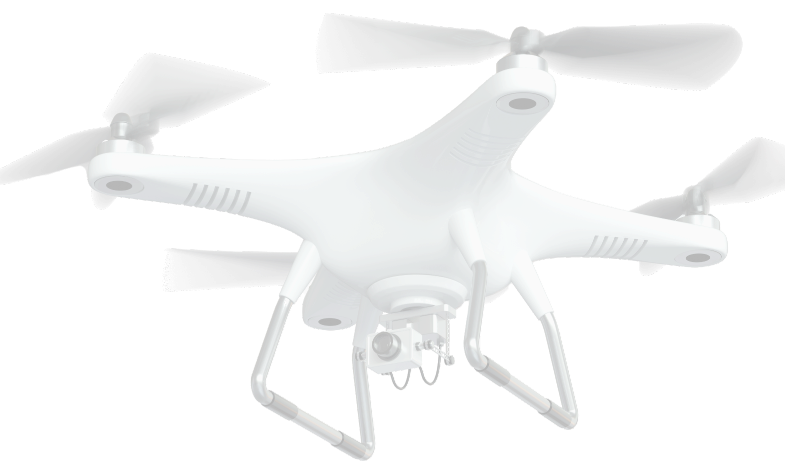
00:10:57 Andrew Smith: When you want to shark fish, you carry some pretty big baits. And they were the first company—they were designing the drones for like military. But then shark fishing ended up using it more. So then they came out with this model that could carry like 10 pounds, because their other models—they had other ones but they couldn't carry—I think it was like four and a half was the max, and that's just not big enough. And this one can go in pretty much 30 mile an hour wind or so. So this was just completely game changing.
00:11:33 Chris Tonn: And does it support just one, or is it multiple elements it can carry? What's the setup?
00:11:41 Andrew Smith: There's two releases. So you could have somebody, say, drowning 200 yards to the west, drop a life jacket, and fly 30 miles an hour 200 yards to the east, drop another life jacket. And technically, if you had to, you could drop a life preserver and a bait line around it.
00:12:00 Chris Tonn: Yeah. Now this sparked obviously a little bit of awareness to some of these products within the space. I hear you got some pretty cool additional life preservers that self-inflate upon touching the water that you'll be keeping on you, should you ever encounter this again?
00:12:23 Andrew Smith: Yes, and they actually want me to make some videos with them—filming how I attached it, how I dropped it and stuff. And they're out of Germany. And there's another company in Hawaii that's also been trying to contact me. And the life preserver—the yellow one that I used—Gulf Breeze Rotary Club put that out there. They're putting another one out there in a couple weeks. And Fox News 10 wants me to go out and take a picture with it. More lifeguards say it's completely game changing. You could have 15-foot waves and just fly above it.
00:13:01 Chris Tonn: Yeah, no, absolutely. That's the beauty of it. And I hope that it brings also maybe a step forward in integrating some of this really cool technology into a more permanent or seasonal focused outreach. One, I'm sure there's also shark awareness—when we're out there swimming, sometimes we can keep folks a little bit more aware of where some sharks might be swimming closer. Obviously, somebody getting out a little too far, get on the speaker and announce, "Hey, you're getting a little too far, come back in." And obviously the last and coolest part—the life preserver being able to be deployed. Do you think that's something we'll see in the near future on Florida beaches or elsewhere?
00:13:47 Andrew Smith: I really hope so, because it's getting kind of hard to find employees nowadays too. And one lifeguard could cover a lot of beach with the drone. You just have it put together, sitting up on the lifeguard tower, and have the float already attached to it. And you don't even have to be out of your tower, and you could already have life to the person. Work smarter, not harder. I don't see why they wouldn't. It was $3,000, but how much is a life?
00:14:13 Chris Tonn: Yeah, absolutely. As you mentioned, we had what, 50 reported rescues and two unfortunate people just in the last week that didn't make it. So this is something that continues to repeat itself each season. This isn't just one season being worse than another—it's unfortunately consistent, and awareness is a factor that has to keep going.
00:14:37 Andrew Smith: People think about like California with the massive waves. East Coast, it's not very big waves—it can't be dangerous. But Panama City has the most drownings in the country. And it's not even—people think that it's about the waves too. The flag system has nothing to do with waves. It's all the rip current. People don't listen.
00:15:01 Chris Tonn: It's part of it. Now, advice for other folks that are interested in getting into the drone fishing world, or just drones in general—what's a good piece of advice to maybe pass along to those that are interested?
00:15:15 Andrew Smith: Practice with it a lot before you take it out. I have wrecked mine like 10 times before I got good at it. It's completely game changing. I can't kayak anymore because I have a bad seizure disorder—I have them every couple days. And the drone fishing—shark fishing is by far my favorite hobby, and without the drone, I wouldn't be able to fish. And you can do so much with it—you could find someone stranded all over the place, get some deer in the woods, all kinds of things.
00:15:53 Chris Tonn: Oh, the use cases are galore—from the life-saving search and rescue, agriculture, going into the marine sector, shoreline erosion tracking. I've even seen whale research with snot collection drones. When the whales come to surface and do the little blowhole and the water comes out—or the snot—there's just drone usage for all sorts of cases. So it's always the most exciting to hear it straight from the person's mouth that was involved. And we just can't thank you enough for coming on the show and sharing your story. But I also want to leave the floor open to anything else that you'd like to bring awareness to, or just talk about in general.
00:16:44 Andrew Smith: Also, up in Pennsylvania where I'm from, they'll use drones to track—like if you shoot a deer in the gut, then you gotta track it. They'll just use the drones to track animals with thermal.
00:16:55 Chris Tonn: Thermal, yep, that's right.
00:16:58 Andrew Smith: So there's people up there—there's so many things you can do, basically anything with your drone depending on your interest.
00:17:07 Chris Tonn: And that's why it sparked so much curiosity in our audience and beyond. Because really, the imagination hasn't come up with all the uses just yet. Being on the school side with guidance counselors, we talk about like drone agriculture spraying and how it really didn't exist a year and a half ago. There's just no job code for it yet, but we do need to start bringing in this next generation of workforce-capable drone operators. And you're a prime example of someone that's used it in a really cool way. And it's just neat to hear the story. And obviously, we'd love to have you back on after a few more rescues and a few more fishing stories.
00:17:48 Andrew Smith: Hopefully no more rescues.
00:17:52 Chris Tonn: Yeah, I hear you. It's a stressful one, I can only imagine.
00:17:56 Andrew Smith: I still don't know how I did it. I've watched that video so many times. I still shake just watching the video.
00:18:02 Chris Tonn: I can imagine. Well, it's much appreciated that you were able to power through those stress moments and get the job done. I know it did well for all parties. So cool. With that, we'll end this episode. And thank you again for coming on to Aerial Perspectives. Really appreciate it. Job well done.
00:18:15 Andrew Smith: Thank you.