Episode 8: Aerial Perspectives - Running a Drone Imagery Business
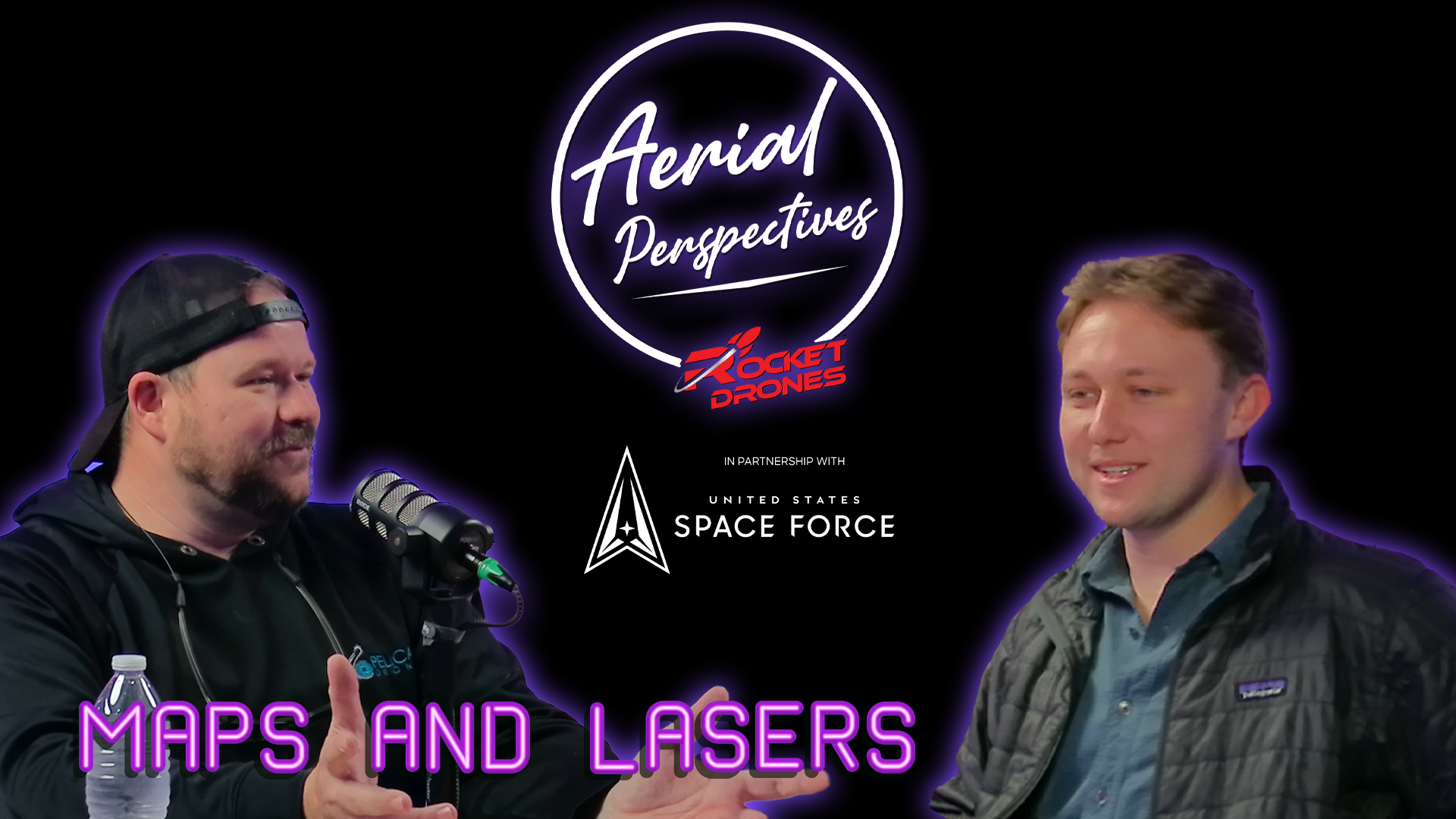
Guest: Ben Vogel, Pelican Drones
Host: Chris Tonn
---
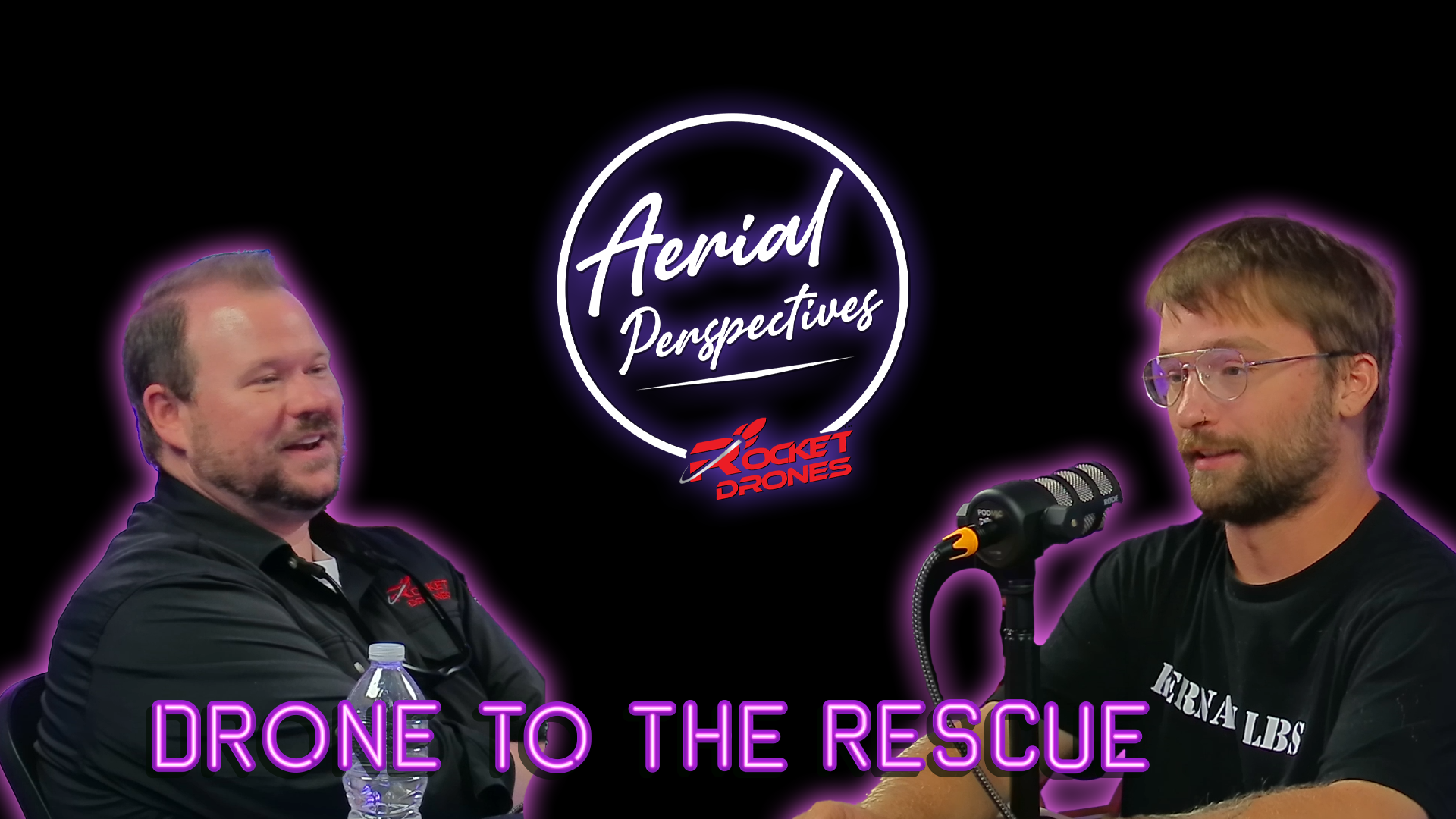
00:00:01 Chris Tonn: Welcome back to Aerial Perspectives. We have a familiar face on the show today from a previous episode. You might recognize the USS United States, Mr. Ben Vogel from Pelican Drones. He's been with the team now for about seven years, and he's a huge part of the everyday operation of Pelican Drones, and basically is the reason that Rocket Drones can even exist in the first place. So without further ado, we welcome Ben Vogel to the show. So welcome, welcome, good sir. What's going on, man? It's good to see you. I know it's a little different setting.
00:00:36 Ben Vogel: Having internet is—I thought I was gonna hear applause there for a second. But yeah, it's awesome, man.
00:00:43 Chris Tonn: Love it. Well, as always, we like to kick things off with a little bit of a background story of how you got into this and a little bit of what you do on the daily. But I'll let you kick it off.
00:00:55 Ben Vogel: Yeah, so I got into it because of you, of course. I was working for a glass company, and I remember one day you called my dad—and my dad was a fighter pilot—and Chris called him up and said, "Hey, check out the drone stuff." So my dad called me, and I was oversleeping that morning, and he was like, "Come check out the drone with Chris and I." And so I was like, "No, I'm not gonna go. I'm just gonna hang out at the house today." And then I hung up the phone and I was like, "You know what, maybe I should go check this out." So I went out, you and I and my dad flew the drone. And I kind of had like a little natural ability going on there. I've always been a big movie fan but never worked with cameras so much. But there was a little easy transition between loving to watch movies, video games, all coming together.
00:01:58 Chris Tonn: Yeah, no, you're underselling the ability. It was kind of an eye-opener for me as a business owner when you came in that day. And it was first fun, like let's get to know this drone and just enjoy a little bit of hangout time. And I was like, I saw Ben being like, "Hey, can you maybe move into an orbit around us and keep the camera facing us?" And the next thing you know, you're just doing orbits. And then I was like, "Alright, try and maybe gimbal up while rising." And it was like silky smooth stuff. And I was like, this is a skill set right here. And something that I didn't hesitate to bring you on board, and super glad we did, because now it's turned into so much more. Well, tell me a little bit about the day-to-day at Pelican.
00:02:51 Ben Vogel: Well, just to kind of end on that last story, the thing that really surprised me was I've always been the kind of employee that can learn things really quick. I felt like for me, it took me a while to really get the hang of the drone and camera operations. I mean, it took me like six or seven months to really get comfortable. So like, if people out there are struggling and they're a little frustrated, it does—if you're not familiar with camera systems, which I wasn't—just hang in there. Flying every day, just flying to film your house or follow a car down the road—nothing creepy—but just flying day-to-day can really help you get to that next level. But anyway, as far as Pelican goes, we do a diverse range of services, everything from real estate to construction, shooting commercials, working for TV shows. Kind of a one-stop-shop production company now.
00:04:01 Chris Tonn: That's a full range of imagery services, to say the least. And I know you do a lot of different work for a lot of different clients. You've been able to manage not just local businesses but also some of our national brands like Netflix and Hulu, and getting into also United States Navy. And the list goes on and on—HGTV, Beach Hunters, and all the Bargain shows.
00:04:31 Ben Vogel: Never thought I would be doing that, but it is very cool. And I do like all the work we do, but I particularly like some of the more construction architecture jobs that we do, because I really love the planning side of it—planning a job with a client and then delivering that and then being really stoked about it.
00:04:55 Chris Tonn: Well, let's take that a step further, because I think a lot of people want to know that deeper dive into that whole process. It's not just we show up at a certain time and fly the drone and get the pictures and deliver. Like you said, there's a planning chapter in there, there's a quoting chapter, there's a question list that's designed to trigger any red flags. Walk us through—if I'm a new client coming in for imagery services, what are some of the things that you have to go through to make sure that it's a smooth operation and that everybody's happy at the end of the day?
00:05:36 Ben Vogel: So if it's somebody that has never purchased a service like this, you really do need to put them through their paces when it comes to questions, because they may not know what they want until they see it. And that might not be the most ideal situation, because you can deliver something and once they see it, they're like, "Oh, I wanted this instead." So you really want to pick their brain and try to get that information out, especially if they've ever worked with drone services. Or simply a question we normally ask is like, "Hey, what's an example video out there or photo?" And that can really start a good dialog there. But you know, just good communication covering all the bases between angles to shoot, any special things you want to highlight—you want to get all those questions up front.
00:06:41 Chris Tonn: Yep, couldn't agree more. And then that differs completely from a client that comes in with a movie set. They've got the whole screen-by-screen of what everybody's going to be shooting. Then there's the drone portions, and they know exactly when and where they want you and what kind of gear specifically they want. And the only other things are really getting into the dynamics of that more leveled approach to a production where you have everyone from camera grips and people that download footage and all the other pieces. But it's cool to see all the sides of the business, not just the flying side. And I know that leads to next—obviously, as you kind of master the camera on a drone, you carry over that same skill set to the ground. And I know one of the more recent things that came out when we started up was the gimbal—the on-the-ground gimbal version where you can walk around and do these tours. Tell me a little bit about where this can sometimes lead for upsells. Because business owners in the imagery service want to be diverse. You take us there, and I know we end up doing this with other things like Matterport and so on. Where can this sometimes lead on the extra upsell options?
00:07:58 Ben Vogel: It is good to have a lot of services in the tool bag, if you will. Because obviously the drone won't be able to cover all the bases you want, especially on interiors—you want to have that ground capability with the gimbal. I feel like the camera, like the DSLR camera systems, for me was a lot harder to learn those type of skills over the drone. But once again, you just got to stick with it. There's a lot of great content on YouTube. But yeah, having a diverse range of services so you have the opportunity to upsell and kind of make it a one-stop-shop for your client to keep them coming back for more.
00:08:50 Chris Tonn: And an example of that too on the financial side—we could go from a $250 to $300 drone photo session to adding on Matterport at 10 cents a square foot, or adding in video editing and other services that bring that top-line price point up to maybe $1,000, $1,500, $2,000 in some cases. So it's important to know those skill sets beyond the drone, because if you learn the camera on the drone, with a little more practice you can get those DSLRs down to a fine science as well. Well, tell me a little bit about some of your favorite jobs. You mentioned construction. Is there one that sticks out as a particular job?
00:09:33 Ben Vogel: The bigger commercial TV show jobs are pretty fun because the client knows exactly what they want, and you can really make a name for yourself out there if you can really tell one of these directors, "Hey, whatever you want, I can do it." And that sounds easy, but apparently it's not, because I work with a bunch of different directors and we'll go over the shot, I'll do the shot, and they'll be like, "Gosh, that was so easy. Why can't it always be like this?" And it kind of surprises me that it isn't that easy. But you know, just listen to your client. But to answer your question, we did a Netflix show. It was extremely challenging, but by the time we got done with it, it was a big air of relief, but the client was super stoked. The only thing I can say is that it was a water-based operation and it was in very bad weather. Something that we're known for doing is a lot of water-based operations, and those can be really challenging.
00:10:56 Chris Tonn: Now, absolutely. Spicy on water.
00:11:02 Ben Vogel: We've had some good ones.
00:11:05 Chris Tonn: No, absolutely. And I can't say that there's ever really a dull moment in the driver's seat of a business. I'm sure you're used to changing around for weather. You're used to changing things for requests from the client side, and the list goes on. But at the end of the day, it's also maintaining the relationship. It's a service business at the end of the day.
00:11:27 Ben Vogel: It is. I mean, even today—actually the last week and a half—weather has been really spotty. It's raining, it's sunny, it's cloudy, it's whatever. And like, I have a few jobs that are about an hour away, so I have to—I've been watching the weather all day. All of a sudden it's like, "Oh, it's sunny. Let's go now. Oh no, it's raining." And then telling that to a client that's up in like Kentucky or Nebraska, they don't know what's going on here. So just keeping that dialog going because they want it now, but you just got to put them at ease, you know?
00:12:06 Chris Tonn: Yeah, it's super important to communicate, keep everybody abreast of what's going on. I can't tell you how many folks really skip out on that chapter and wonder where the return phone call is on the next go-around. Well, in addition to the fun jobs, there's got to be one or two that stick out as maybe a not-fun moment.
00:12:32 Ben Vogel: Few of those, some interesting ones. But the most recent one I can think of was we do this progress imagery job for a four-mile bridge construction job. It's a pretty big job, and it's a little scary, to be honest. We filled out all the proper paperwork with the FAA because there's a military base nearby, and it's about two or three miles long, this job. And there's a lot of air traffic. There's advertisers flying around, there's F-22s flying around. So it can be a little overwhelming. But there's this weird spot—so there's a Publix there, and you're doing this imagery of the bridge, and then right over on that next side there's this weird circle that is locked for some reason. From what I understand, there used to be some kind of military tech there. It's right over a hotel. So I don't really understand why. Anyways, there is a part of the road that cuts off right into that circle, and the client wanted to include that area. So what I was doing was staying away from it and getting more of an oblique angle. But this one time I was like, you know what, let me just put an application for it, see if I can unlock it. And I did. So I'm on the other side of the bridge, about two miles away—keeping line of sight, of course—but I flew into the circle, and for some reason it wouldn't let me fly out. And I was at like 35% battery. And so I was like, okay, I got a few minutes to work this problem. And I'm working the problem, trying all these things, and nothing is working. And that drone is about to land within a few minutes. So I had to run two miles over this bridge in the summertime just to watch this thing come down, because I couldn't get out of the circle, and obviously I didn't want to land a $3,000 drone in the middle of Publix and have some person just grab this thing and run. Full construction gear, running across this bridge just to get to the spot. And it was an interesting one. Keeps you young.
I mean, you and I were on one when the Pensacola Bay Bridge got destroyed somewhat—it was sectioned on—and this will be a good story for some of the new pilots out here, just some of the things you need to think about. But we couldn't—the bridge is three miles long. It was broken up into like three or four pieces because of the storm, and the contract wanted the whole bridge photographed. And we flew all the way down, and we kind of—it was windy that day—and we kind of overplayed our hand and we were losing battery quick. And we kind of knew we weren't going to make it back. So just general on-the-fly thinking is okay, let's get as high as we can legally and just start making the trip back, because it was quicker coming back than going out because of the wind. But the fact that we went to max altitude while we're returning, when it did run out of batteries it was coming down, but we're coming down from 400 feet, so it gave us an extra landing zone. And we didn't make it. But eventually it turned out all good.
00:16:28 Chris Tonn: You know, it's so funny you mention these scenarios of knowing your limitations but also understanding that it's a moving target sometimes as winds pick up, conditions change, and it's an evolving situation. I remember there was one going back to the Three Mile Bridge in Pensacola Bay—there was a helicopter out of like our left side, which we see helicopters all the time. We're home to the naval flight training center here. If you fly anything United States Navy, you come here first. But this wasn't a normal helicopter. It was kind of getting closer and closer to the downtown area. And I remember all of a sudden we were both keeping eyes on it, obviously, as we do with manned aviation as it gets closer to our area. But it started to like dive-bomb the Cinema. That's right. It started to dive-bomb the South Palafox pier and started to go parallel with the bridge. And we obviously grounded operations as they got over to us. But it ended up being the cinema helicopter for the Blue Angels IMAX movie that was on Amazon Prime. And it was just a fun moment to see something a little different. But that's the thing—always be prepared for the different, because it does happen.
00:17:51 Ben Vogel: Yeah, we've seen a lot. I mean, I remember being on the front of a boat and we thought a UFO was flying in front of us, but it was just a big airplane and it was at night. But that goes back to flying every day because you run into some interesting problems, and just knowing how to solve them quickly will definitely save you. Like making sure your home point is not under a tree if you're under a tree. Making sure you're not returning to home or something. And it's always faster to fly up than it is to fly down or left or right if you run into a problem. So there's a lot of things that you're going to learn while you're flying.
00:18:35 Chris Tonn: Oh, absolutely. I think you've probably experienced just about all of it within the last seven years. And not just in those cases, but also the FAA—you mentioned paperwork requests where we have to unlock an airspace or have to apply for a waiver that may be for a long duration of time so we can do progress imagery on like a bridge or other things. Is that something that's overwhelming? Is it something that you find to be a pretty easy task? Walk us through a little bit of that.
00:19:11 Ben Vogel: I mean, at first I think it was a little overwhelming, but it all makes sense. And I just want to say to all the drone pilot guys out there—fill out these applications. I feel like eventually you're going to have to anyway, but you better get used to it now and get some of those contacts at the FAA. We have a few contacts we talk to, and that is one of our specialties, is unlocking the unlockable, if you will. But yeah, just get used to it. It's pretty standard information—address, how far away you're flying, how high, when, where, all that stuff. It gets a little more complicated when they say no, or they cut off a little piece that you don't want. And that's where you just got to learn to communicate with them. But everyone out there definitely start filling out those applications. I know some of y'all are skipping that.
00:20:16 Chris Tonn: Yeah, that's right. Take, you know, what's the worst they can say is no. You got to try, do it right. Keep those clients happy, keep your insurance people happy. Everybody wins when you play by the rules. Now, speaking of unlocks, I think we've had some fun ones in the past. As a matter of fact, two airport unlocks—one on Mobile International in Mobile, Alabama and Pensacola International. Those were fun for all parties. Can it be done? Should we even fill out this paperwork? Thankfully, it did pay off to fill out that paperwork and work with the officials. They did, in this case, pick up the phone and physically call for some questions.
00:21:10 Ben Vogel: But finding that they're doing that more often—like for military around here, there is like one person who takes care of that. So once you talk to her, you know her. But if it's a physical airport or a different private airport, you'll talk to different people. But I have noticed that they are way more communication-friendly. Like they'll call you up and be like, "Hey, I can't do this. Can you do this instead?" And that's helpful if they're being friendly about it and reaching out and doing a dialog.
00:21:47 Chris Tonn: Yeah, it goes back to that service side of the business, even on the relationship side of the vendors and the partners of the FAA. Clear communication always helps your case to streamline everything forward. Which in the airport one—was certainly a stressful one, because the airport was not closed down. It was active, and there was like Southwest Airlines landing behind us and other things. But the client was happy, we got the shots, and it was a great day. And there was somebody standing next to us at all times with a radio to the tower. All the extra layers. But what are some other fun projects? I know we had Netflix's Tiger King Two.
00:22:33 Ben Vogel: Yeah, we shot some jet skis. Actually, you ran the drone that time and I was your visual observer for that one. I did a romantic reality TV show for Hulu that was pretty fun—good group of guys there. We did an interesting one where we attached a VR camera to a parachute—parasail, yeah. And that was for some tourism VR system that was going to be all over the country.
00:23:10 Chris Tonn: Yeah, that's right. It was such an interesting—so we have some clients that think like, "Oh, if they can figure out a drone, they can figure out all these other technology things." Well, one of them was a live cast from a school partner in the local area that's been with us for years now. And the same logic applied to this shoot where they were like, "Hey, we want to strap a 360 camera to a parasail and get a simulator built to put people in the airport that are waiting around up north that don't know about Alabama beaches, to put on these VR glasses and sit down in some beach chairs and just enjoy a little parasail ride in the airport." Which I believe was wildly well received by the client side. So all good stuff. But it is amazing the level of imagery services that people think of. Even recently, I think there was a foam suppression test for aircraft.
00:24:10 Ben Vogel: We don't like to say no very much, and I think people come back to us for that reason, because if they have an interesting problem, they know that we're gonna at least try. And we're not gonna say yes unless we know we can do this. But the fire suppression one was interesting. That kind of—that was your baby there in my opinion, with the transmitters. But I honestly didn't think we were gonna be able to pull that one off. But it was a huge hangar, like 120 feet by 300 feet, something crazy. And they wanted a camera on each corner, on each side wall, so they could see where the foam was spreading to for the inspection. And all the cameras had to run until the foam crossed a certain point so the inspector could say it's all good. And if anyone's done like live transmissions or whatever and you're in a different room, it's metal, it's huge—they know that this is a nightmare job right here. But we pulled it off.
00:25:20 Chris Tonn: We did. That was really cool. Chantry was there. The whole team was there for that one. It was something that you don't see every day, but we were sure stoked that everything technology-wise worked at the end of the day. And I guess that's a whole other chapter—in our line of work, technology is great when it works. Obviously, drones are no exclusion to having curveball problems, not just the conditions changing on the fly. I'm sure you've encountered weird error codes on the drone. Battery problems.
00:25:55 Ben Vogel: I mean, just after long use, you'll run into it. Like my controller—it stopped working just for no reason, so I decided to send it in and get it fixed.
00:26:07 Chris Tonn: Now, there's some cases too that I'm sure you can work through some problems, like you mentioned unlock zones, and sometimes it's just a simple little battery issue. Maybe the batteries are overheating. Anything else that's workable—have you learned a few tricks over the years through this tech?
00:26:24 Ben Vogel: Yeah, I mean there's nothing like a good turn off, turn on. It's the simple stuff—recycle, whatever we call it. Just turning everything off and turn it back on. This fixes a lot of things. Knowing how to calibrate your drone and all the sensors is a plus as well—that will help some weird errors you'll have. But kind of with this newer stuff, I have not run into a lot of the weird stuff we would run into with the old Mavics and the Phantoms and whatnot.
00:26:59 Chris Tonn: Yeah, it was a little more consistent problems, I'd say.
00:27:02 Ben Vogel: Exactly, and wandery elements. Totally.
00:27:05 Chris Tonn: We got more precision, more tools in the toolbox with features and smart unlocks. But at the end of the day, I'm sure you're still encountering situations where a good manual pilot skill set still kicks in.
00:27:23 Ben Vogel: Oh, yeah. I mean, I don't use sensors ever. I don't know if you guys use the sensors or not—for like running into something—well, it throws you off your game when you're filming. I don't ever use them. And it's like, I always look where I'm going, which is a big key. I feel like you got to look before you go. So I never use the sensors on there to protect me from crashing into something. I just do it all by eye. But I didn't come in until the Phantom series, so they weren't very reliable back then, so I just never got used to using it. I'm lucky I didn't have to do the GoPro stuff. I'm pretty sure that you were on that.
00:28:13 Chris Tonn: Oh, it was a different world when the camera didn't talk to the controller. You didn't see it until you got down to the ground, and if you forgot to press the record button before you took off, it was a bad day. But the manual elements—you kind of look at the sensors obviously as a great training wheels platform. But when you start to do the pro-level shots where you're flying through a tree to get to the entrance of a house and you want to stop short, well, guess what? The sensor might stop you short on purpose. So it's something to definitely keep in mind. But in addition to some of these things that throw us curveballs from both the technical side, is there like a fun story that you worked through in the field where either you lost line of—not line of sight—but visual on the monitor and had to recover by the other tools in the toolbox?
00:29:15 Ben Vogel: Yeah, I mean, I've definitely lost like the monitor due to overheating or something. We're in Florida, it happens all the time. Just keeping a visual eye on the drone is definitely the way to go. Or just being familiar with where you're at—your situational awareness is definitely key to staying on top of any issues that might pop up.
00:29:42 Chris Tonn: Yeah, it's funny how the drone orientation and your orientation have a lot to do with your emergency protocols of knowing exactly where it is. So I notice you do it all the time, like it's second nature.
00:29:53 Ben Vogel: It is. It's just experience. You'll know where it is.
00:30:00 Chris Tonn: And that brings me to my next point. If you've flown drones long enough, you've had an oopsie—you've had a little bump or total crash situation. But I think the biggest thing is it puts you back in your respect side of these are the areas I don't want to get too comfortable with because anything can happen. I remember one of my stories—I had put on in the Phantom days an amplifier on the transmission system to ensure that we could have just absolute best quality signal. During what in the beginning days weren't the best on range, you get into urban environments with lots of signal. But the battery on the amplifier had died and I was under a tree, and this drone just goes straight to return to home up into the tree. And obviously it didn't fall very far, but I definitely wore that propeller of shame afterwards for a little bit mentally. So we all have these stories, but it restores your respect for following the steady Eddie approach of keeping yourself out of trouble.
00:31:17 Ben Vogel: I kept a broken prop on my desk for years because I crashed one really early on when I first started. But there was like that seven, eight month period where I got like cocky, you know, and didn't take the extra precautions. And it's like, "Hey, did I just fly through power lines right there? Oh my gosh, I need to look where I'm going." Yeah, just don't get too cocky out there.
00:31:44 Chris Tonn: No, that's great advice. And I mean, it's always important to stay grounded with it all. It really is. Well, tell me, what are the strengths that you look for when you go into the world of bringing on new pilots and new filmmakers and content creators? What is kind of the stuff that sticks out as something as an attractive hire and something that gives these audience members a little bit of understanding of where these strengths are?
00:32:18 Ben Vogel: Yeah, I would say one for me would be just to have a portfolio of some type. I mean, I get calls all the time with people asking if we're hiring, and it's like, not right this second, but send me what you got and I'll take a look. Nobody ever has a portfolio or anything. I'm like, "Hey, just go shoot a random house or construction site. You can shoot whatever you want. I don't care what it is, but I gotta see something," right? And just no one sends me anything today. I mean, I've spoken to like 50 people in the last five months, and no one sent me a portfolio or anything. But it goes to the thing of flying every day. Shoot your house, shoot a random neighborhood, a construction site, a road, the beach, whatever it is—shoot something and store it. And just building that skill and replace the photos you don't like that you think are better or worse, and just filling it up.
00:33:25 Chris Tonn: Agreed. If you can show them, it puts everybody's mind at ease that there is a capability and a skill set there that's worth entertaining, especially if a business is growing and looking for stability. Businesses that are in the service side that depend on the talent to execute the missions really want to make sure that that skill set is intact. Which obviously—I know another thing we would probably run into, like we started out, is "Hey, show us your skill set. Let us run you through the paces gently, of course."
00:34:01 Ben Vogel: And obviously being able to communicate with a client is a pretty big deal as well. I mean, you don't have to be Rico Suave or whatever, but just being able to hear what a client is saying, indicate any questions you have, and then deliver that.
00:34:18 Chris Tonn: Yeah, no, absolutely. Well, let's talk about the future for just a little bit too. I know folks are always interested in what's around the corner. And I know we've been seeing some big changes in the world of AI video and in the world of drones that basically can fly themselves to a degree. Do you feel like at some point we lose out on some of the content creation, or is this just the beginning of the chapter?
00:34:46 Ben Vogel: I think we are, man. I really do. The AI tools are building pretty quickly as we speak. And I mean, I just saw a news story that was completely fake and I thought it was real—like all the people, and it looked real. I mean, they were a little—it's got that kind of sheen to it right now. But I mean, are people going to be able to even type in their house address and be like, "Make me a video"?
00:35:17 Chris Tonn: Yeah, five years. It's an interesting chapter that I continue to watch very closely. But at the same time, it feels like there's more of an attention grabber that you can get in the very beginning of your video and kind of transition over to whatever your message is. There's obviously a fun factor to a talking rabbit or gorilla or other animals that have really taken storm to the beginning. But you're right, looking ahead, these are pieces that almost feel like they get layered into the services offered within the content creator community as another tool or upsell in the box. Because these are tools that folks just don't have the bandwidth to master themselves and spend the time becoming prompt masters on all this stuff. So it's fun to see, but I also am with you. It's like, this could get a little bit interesting, because I too have fallen for a video—or at least a short snippet—where I was like, "Was that real?" I don't know. Any thoughts on drone future elements we're seeing?
00:36:29 Ben Vogel: I think the services like delivery services, rescue services, law enforcement services, stuff like that—I think that's really where it's going. Because you're going to need some type of human hands on that. Maybe the real estate and some of those kind of services are going to kind of fade out because of AI. But when it comes to rescue or delivering—that needs some kind of human help.
00:37:00 Chris Tonn: Couldn't agree more. It's fun to see that we sat in the photo and video usage category of drones for like a decade. And that same decade we heard, "Delivery drones are coming. This technology is coming, that technology is coming." And finally it's actually here in some forms, because now we're seeing agriculture crop spraying. We're seeing drone mapping with LiDAR down to less than centimeter accuracy. We're seeing a lot of delivery applications finally coming into fruition down to six-inch delivery accuracy and so on. But it's just neat to talk about it sometimes. Is there anything that you just really look forward to?
00:37:54 Ben Vogel: As you named, I'm definitely looking at getting more into that LiDAR, AG stuff like that. That is something I am very interested in.
00:38:05 Chris Tonn: Yeah, it seems to be a just-beginning chapter of where this is headed as multiple industries continue to tack on. But nonetheless, this is always fun to catch up. We don't get to do it as often—always very busy we are—thanks to the local community. And so yeah, actually, we have some customers you travel for too. I know there's been some talks of maybe even a little Hawaii travel.
00:38:35 Ben Vogel: Hawaii. Yeah, fingers crossed on that.
00:38:38 Chris Tonn: And that one's our hotel client that really enjoys our services. Because again, Ben gets to show up, do the drone, do the ground, do the Matterport, do it all and get back out of there. The client doesn't have to call three different parties—keep it consistent. That's it. Well, thank you Ben for jumping on the show with us. Any closing little thoughts or snippets to pass on to the audience?
00:39:07 Ben Vogel: Just keep it safe and keep it pro, and I don't know—have fun.
00:39:12 Chris Tonn: Absolutely. Well with that, we're out. Another great episode of Aerial Perspectives. Thanks for tuning in.