Episode 6: Aerial Perspectives - Day in the Life: Covering the USS United States Arrival
Field Episode featuring Ben Vogel, Pelican Drones
Host: Chris Tonn
Location: Mobile Bay & Downtown Mobile, Alabama
---
00:00:01 Chris Tonn: Hello everyone. Welcome to another episode of Aerial Perspectives. Today we have a very special field trip into a day in the life of a drone operator. Today we're actually tagging along with Pelican Drones and our pilot Ben Vogel, and we're gonna see a little bit more of what it's like to cover a drone job—a high-profile drone job at that—including what will be the arrival of the USS United States here in Mobile Bay and downtown Mobile, Alabama.
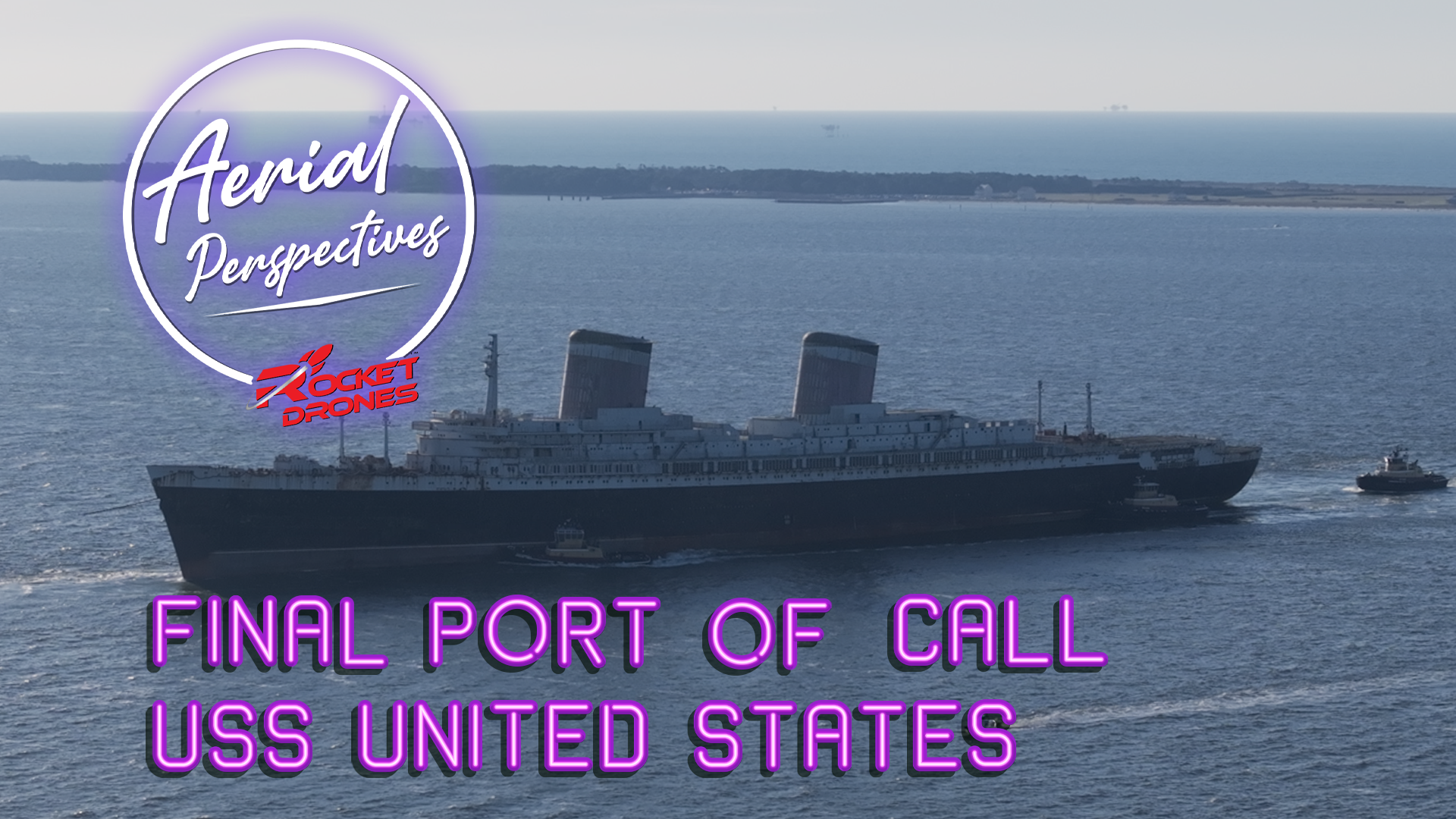
This ship is pretty cool. It's a thousand-foot-long old 1950s steamboat that was one of the fastest steamboats of its time for transatlantic crossings. It's now going to become the world's largest artificial reef right off the coast of Destin, Florida. So come along, let's check it out and see what's involved with covering this really cool drone job.
[LOCATION 1 - MOBILE BAY]
00:01:15 Chris Tonn: All right guys, we're back, and it's time for our safety checkpoints and dialing the drone in. As you can see, I'm in my high visibility gear. We've got Ben behind me getting the drone ready for the final steps here.
Obviously, one of the things that we're doing first is getting that ND filter picked out. In this case—what are we going with, Ben?
00:01:35 Ben Vogel: ND64.
00:01:37 Chris Tonn: ND64. So that's the deal with all this fun sunshine we've got this morning, and it'll help us ensure we have some really good shots of the USS United States ready for launch.
And one of the things we just noticed is another drone. So part of the safety inspection is going to be visual observer watching out for traffic just like this. So here we go. Gonna be keeping a close eye on everything.
And we're up. All right, let's see what the action is here. We're gonna go get a looky-loo. We're gonna keep an eye on this other drone, and off we go.
[SECOND FLIGHT]
00:02:30 Chris Tonn: All right, we're going up for second flight. Ben's getting ready. Got the drone warming up over here.
One of the things we've had to space out some of the video filming on has been some of the air traffic—not just drones, but also airplanes. We've had about two or three airplanes in the vicinity. So always keeping an eye out as we operate, making sure that there's no threat to us or the drone itself or other aircraft.
So anyways, we're going up for again another establishing shot. The vessel's quite a distance off—you can see it over my shoulder there. But this is our secondary location. The primary will be downtown Mobile, where we'll get a lot closer shots and whatnot.
Another thing that's going on while we fly is we're constantly communicating with the production team, updating them of what's going on and how the shots are going, because they are at a separate location doing ground shots and interviews of the folks on the ground. So a lot of moving pieces. Multitasking is the name of the game.
[SHOT TERMINOLOGY BREAKDOWN]
00:03:45 Chris Tonn: Pushes, pulls, slides, risers—what is all of that? And how does it play a role in this film production?
Well, basically, I'll go through them one by one, but some of them are self-explanatory.
Essentially a RISER is your slow up and down. Maybe you're gimbaling the camera as you rise to give it a little cinematic feel, or raising the camera up as you come down—doing that fun little establishing shot with a riser.
The other one is a PUSH and a PULL. So it's just like it sounds. You're pushing in on the subject matter very slowly, keeping the subject in frame, and then you're backing out and keeping the subject in frame.
The last one was the SLIDER, which is just that—we're just sliding from left to right with all of our nice, consistent maneuvering of keeping that boat in frame as we do it.
Another fun one that we may or may not do at this location is going to be an ORBIT, which is where we essentially orbit the vessel in a nice circular pattern, keeping it in the center of frame at all times.
So anyways, it's a fun little shot list lingo for you.
[LOCATION 2 - DOWNTOWN MOBILE]
00:05:00 Chris Tonn: We are at location number two. This is our primary location in downtown Mobile. This is where the boat is going to dock—the USS United States.
We've got Ben doing some final checks on the gear, getting us reestablished. One of the things that we did on the way over here is we offloaded the footage from the drone to the computer. We are doing operations over the water. So in the event of a total loss, such as a bird strike and we land in the water, we can absolutely salvage that footage and not just lose our drone, but rather keep that footage safe and intact.
So anyways, more to come. Little update—the boat will be going right over there where that red-topped crane is. And we'll be front row and center for the arrival. See you soon.
[INTERVIEW WITH BEN]
00:05:50 Chris Tonn: We're on our primary location here in downtown Mobile, Alabama for the USS United States. I got my buddy Ben over here with Pelican Drones. We're getting ready for setting up the drone for round two.
Obviously, I didn't want to bug Ben too much because we were up in the air and he was concentrating—there's enough things going on. But ultimately, I just want to ask Ben a couple questions here. Kind of give us the lay of the land, Ben. What have you been looking for? What's kind of the happy path for today's shoot?
00:06:09 Ben Vogel: Yeah, today is about range, mostly. So we're flying some pretty far distances—of course, keeping line of sight always. But when you're flying farther away distances, you have to be at a higher altitude, so you can't come down too low. And obviously we're following a ship, so we want those lower shots. So we've relocated to a second spot where we have more of a line of sight on the drone, and we'll be able to get the lower shots that we want.
00:06:39 Chris Tonn: Amen. Yeah, here's a little preview of our site here. We've got news. We've got the film production crew with the local camera, obviously news gear over here. We've got some boats going in and out of the river to go check it out. And yeah, it's gonna be exciting stuff. Boat's about thirty minutes out.
[MULTI-DRONE COORDINATION]
00:07:10 Chris Tonn: All right, things are getting real out here. We've got up to four drones in flight. So when we noticed the other drone operators, what we did was we just brought them over and put them together so we can all talk about what elevation we're at and what side of the ship we're on. So fun stuff. Never a dull moment.
It's getting close. There it is, there in the background.
[CREATIVE SHOTS - POST DOCKING]
00:08:30 Chris Tonn: All right everyone, welcome back. We're getting into the closing chapter. As you heard, we finished all of our basic shots. We are now into our creative shots. The boat has officially docked over here, and we're getting some maneuvering shots of the crane that's loading up ropes and people and supplies.
There's also a little press conference going on over there, and yeah, we're just doing our own thing. Thankfully, one of the benefits of being a drone operator is you kind of get to be off on the sidelines doing your own thing while some of the primary crews are doing their thing.
But we'll check in with Ben. Anything exciting so far?
00:08:59 Ben Vogel: A little bit. We got some workers on deck moving some ropes, operating a crane. And so we're kind of focusing on those areas right now.
[WRAP UP]
00:09:46 Chris Tonn: All right guys, we are all done for the day. Was a great shoot. You can see the boat behind us all tied up. Ben got the creative shots at the end. We'll let him tell a little bit more about any challenges for the day. Anything exciting or spicy?
00:10:00 Ben Vogel: Yeah, I mean, with every flight you're going to have challenges. You just have to work around that. We had a few signal issues, but the remedy is always to fly higher. We had other drone pilots flying. Communication is definitely the key. But like I said, every drone flight has some sort of issue. You just need to know what the remedy is, stick to it and stick to your protocols, and you'll be good to go.
00:10:27 Chris Tonn: That's right. Now, what about those four drones up there with you at the same time?
00:10:31 Ben Vogel: A little scary, but communication is always key.
00:10:36 Chris Tonn: That's right, that's right. Very cool. Well, there's the final tugboat doing the old horn. It's all tied up. It's all secure. And this show is a wrap.
We really hope you enjoyed this episode of Aerial Perspectives and tune in for more. Thanks, guys.