Episode 10: Aerial Perspectives - Building a Career in Drone Mapping
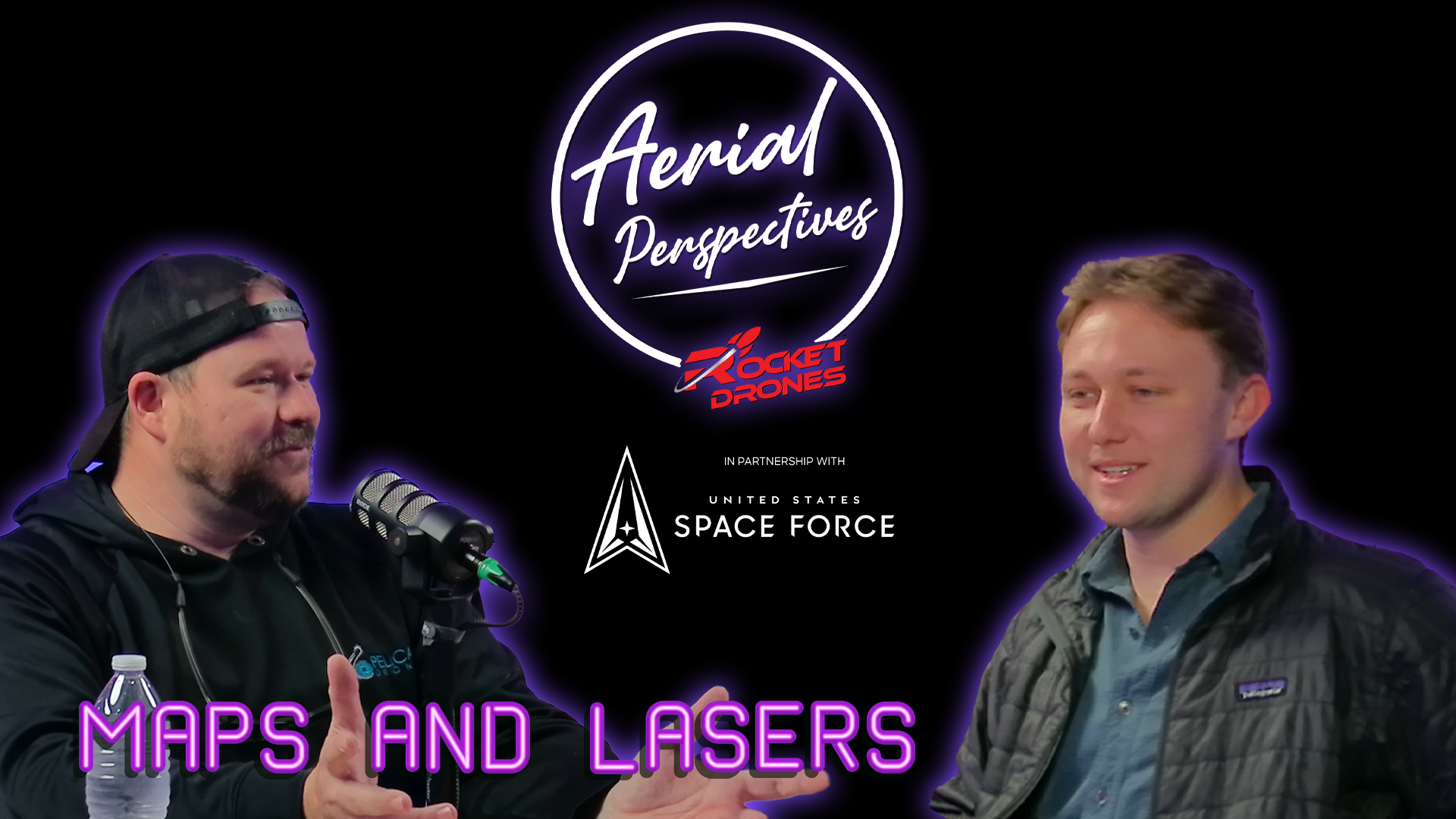
Guest: Wyatt Lueck, SCS Mapping (Pensacola, FL)
Host: Chris Tonn
---
00:00:00 Chris Tonn: So welcome back to another episode of Aerial Perspectives, brought to you by the United States Space Force. We have a really cool guest today, Wyatt, from SCS Mapping out of Pensacola, Florida. Welcome to the show, man.
00:00:15 Wyatt Lueck: Thank you so much. Thank you for having me.
00:00:18 Chris Tonn: Yeah, well, I've gotta kick it off in the normal direction of how did you get into drones and what all do you do in the mapping world?
00:00:25 Wyatt Lueck: Well, it goes way back to around high school. I had a Mavic Air, and we'd take it, go fly drones and get some good videos and make edits. Whenever we'd go on trips places, I got some cool videos out of Ireland and Iceland and stuff. I'd make edits and post them online. We'd do a lot of surfing edits as well. So just with that little Mavic Air. But then moved on to college, went to FSU, and I joined their emergency management program with drones. So they did emergency response, disaster management, mitigation, stuff like that. So that's where I kind of got the technical know-how and ability when it comes to flying and stuff. And that's where I started picking up some of the softwares like Metashape, all sorts of stuff like that. And then I moved back here after college and kind of found the perfect fit here at SCS, where I use a lot of those GIS applications. They needed to expand their drone program, and I happened to have my 107 from that course, and I had all this prior experience. So they wanted to kind of—we do fixed wing collection for LiDAR and photogrammetry. Big area stuff for large areas, lots of roadway, Department of Transportation stuff. So this was kind of an area they had already tapped into but needed help expanding. So I was more than happy to do it. Obviously I got to go fly drones for fun. So we got that Inspired Flight IF1200A with a TrueView 660 sensor on it, and I get to go and fly all sorts of cool stuff all the time. Pretty awesome.
00:02:36 Chris Tonn: That is so cool. And how old are you?
00:02:40 Wyatt Lueck: I am twenty-five.
00:02:42 Chris Tonn: Twenty-five. Think about that. So in college, were you going for survey or civil engineering? Where were you headed?
00:02:50 Wyatt Lueck: So my degree was in environmental science and urban planning. And that's where it kind of lent itself to GIS and stuff like that. So I wasn't necessarily thinking of going the drone route, but I had already had that kind of foundational knowledge from flying the DJI and stuff. Even though it's really intuitive, you kind of got to get those base skills, you know, flying, just doing fun stuff with it. Didn't really think I was going to do drone stuff, but I had my Part 107. So because it was, you know, know how to fly drones, might as well put it on the resume. And so my environmental science degree and urban planning degree, along with GIS, kind of lent itself to this company perfectly. It's what they do. They do aerial collection with photogrammetry and LiDAR. And just so happened to be in my hometown Pensacola, Florida. So it's pretty cool that all of that kind of fell into place.
00:03:40 Chris Tonn: That's awesome. That really is. I have to hear more about some of the jobs you guys do because it's not the standard Mavic mapping missions. It's definitely a notch above. Can you give us a little insight on some of the projects you've worked on?
00:03:59 Wyatt Lueck: Yeah, absolutely. So we do with our fixed wing aerial collection—we have a Cessna 206 with a terrain mapper in it, and that's for kind of larger scale products. But the drones are more geared towards smaller stuff, maybe active development, smaller sites like that. So some recent projects—we did the Sacred Heart Cathedral School. Our basic workflow is that we lay out a KMZ with all of our control that we need to go collect out there. And control is basically a way to lock this LiDAR point cloud to the ground and make it true. Control points are true, and we lock this LiDAR point cloud to it to make it accurate and usable in these tight scenarios.
00:04:44 Chris Tonn: And how accurate are we talking?
00:04:46 Wyatt Lueck: Within centimeter accuracy most of the time. And if we can lock it down to—it depends on the job, really. But it's pretty accurate stuff. So we go out there, we have this control layout KMZ for our surveyors. They go collect control. We then make our flight plan—we used to use QGroundControl, now we use Inspired Flight's proprietary Inspired Flight Control. And that's where we input all our mission parameters like speed, height, side and front overlap for our photos because we use it for photogrammetry. So we need a certain amount of overlap so we can get those models, so you can see in 3D and draw the actual map.
00:05:33 Chris Tonn: So use case—you go out and scan and let's say it's an engineering client. What are some of the use cases that they end up taking these super accurate point clouds and utilizing them for? Is it remodeling? Is it water runoff? Is it all of the above and beyond?
00:05:56 Wyatt Lueck: It does depend on the job, but most of the time it's for Department of Transportation roadway work. So we work on a lot of state roads and interstates, a lot of focus on bridges. Because you need to know, like you said, water runoff issues, and they need to do complete remodeling of some of these structures. So we have to completely get the 3D point cloud of said bridge or roadway, and the accuracy really comes into play there. They have standards for that—they're pretty tight.
00:06:28 Chris Tonn: And how was this done before drones? Was this spot checked with a person and a pole every hundred feet or so?
00:06:37 Wyatt Lueck: Well, they still actually do that in some areas for drainage and stuff like that. Whenever you kind of get into it, LiDAR can't penetrate too well into super dense areas. So that's kind of why we fly in the wintertime—less leaves. But sometimes you can't really get past all that density, and you can't get down to the ground and see exactly what you need. So back whenever they had to survey without drones and stuff like that, whenever you couldn't see it from the aerial images, a survey crew would have to go and get all those measurements themselves. Which they still occasionally have to do. But this definitely helps with speeding along the process way faster.
00:07:17 Chris Tonn: Way more points to spot check as well.
00:07:20 Wyatt Lueck: Absolutely.
00:07:20 Chris Tonn: That's so cool. Now the bridges—you guys have done some higher profile bridges, like the Savannah Bridge in Savannah, Georgia where there's a big cargo port on the other side. What was that like?
00:07:36 Wyatt Lueck: That's a big one for us. I didn't do that one with the drone—we had to do that with the fixed wing aircraft, the Cessna 206 with the terrain mapper in it. But it's basically the same workflow. Once you get that point cloud and you tie it down to the control points, we make our AT, which is our air triangulated map with everything in there so you can see it in 3D. We give it to our compilers and they can actually draw off of that. But yeah, whenever it's such a large project like that, it's actually pretty incredible to think about how much it's impacting other people as well. It's just wild to see the butterfly effect of the work. We're also working on the Stitch in downtown Atlanta. They're making a huge park over the interstate out there—it's called the Stitch. So we've mapped the entirety of downtown Atlanta with a digital twin point cloud. It's got about two billion points in it. So it's pretty incredible.
00:08:23 Chris Tonn: Oh my gosh, I don't even want to know what the computer specs are.
00:08:26 Wyatt Lueck: Oh yeah, the computers chug for sure. They're in there—it sounds like they're screaming.
00:08:32 Chris Tonn: It sounds like this isn't the only cool stuff. You guys have got a new drone in the mix too—latest and greatest. Looks like it's got all the bells and whistles. Tell us a little bit about that.
00:08:42 Wyatt Lueck: Yeah, it's the Inspired Flight IF1200A with the TrueView 660 sensor from GeoCue. So it gets us that required point density we need for the proper penetration, proper point density. Those are all requirements whenever we actually get the RFQ for the job. It flies for about thirty minutes with full payload on there before you have to change the batteries, land it, change the batteries out, send it back up, resumes the mission. And every time it comes down, we pull the flash drive out and we back up the data, and then we take it back to the office, process it all. It's actually a really streamlined, amazing way to get all this info. It's really great.
00:09:24 Chris Tonn: Is it a Cadillac to fly? What's that big drone like to fly, or do y'all fly it manually very often? What's kind of the balance there?
00:09:35 Wyatt Lueck: So whenever you take it off, you have to calibrate the IMU inside of it. So that's about the extent I fly it manually—I take off manually, calibrate the IMU which is 10 seconds forward, 10 seconds backward. You need to kind of jumble it up a little bit so it knows where exactly in space it is. And then after that I had already uploaded the mission plan onto it. So it's just as much as sliding the mission go button. It just goes and flies it. And then whenever it reaches maybe that halfway point or wherever I want to take it back to replace those batteries, about twenty percent or so, I do take manual control over it and fly it back, even though it does have return to home features and capability.
00:10:15 Chris Tonn: Well, this is why we're always talking about the drone workspace. You're either piloting them, programming them to do their autonomous mission, or fixing and building them. So it's kind of cool—you get a little trifecta there.
00:10:27 Wyatt Lueck: Yeah, you get to do all of it.
00:10:28 Chris Tonn: What about getting into some of the ground side of things? Because it's now—you've got this sensor that obviously it flies, but it also can be put on a vehicle. You were mentioning some updates to y'all's vehicles that will allow you to do some other stuff there.
00:10:45 Wyatt Lueck: So the sensor we use, which is the TrueView 660 from GeoCue, it mounts to the bottom of our Inspired Flight IF1200. But we're getting it updated to where you can slide it onto a mobile mount. And mobile means on the back of a truck. So it's angled to where the scan pattern is outward behind the truck as you drive. So it'll help with getting that proper density in urban areas that you wouldn't normally get because you're being blocked by buildings, blocked by trees. So it also has a DMI on the tire—it measures distance. So whenever you lose telemetry inside of a tunnel, it measures the exact distance and records so you can keep that accuracy inside the tunnel as well. It's pretty amazing. We're about to get that installed I think next week.
00:11:38 Chris Tonn: That's so cool.
00:11:39 Wyatt Lueck: Yeah, I'm excited.
00:11:40 Chris Tonn: You guys are on the cutting edge of it all, it sounds like.
00:11:42 Wyatt Lueck: It feels like it. I love being able to get to play with all these new toys.
00:11:46 Chris Tonn: Yeah, you're in the driver's seat for sure. Well, is it—obviously there are the more technical sides to the business. Do you spend time planning those routes and calibrating the overlap for some of the scans? Is it kind of automatic in this world? Where is that side of the prep?
00:12:10 Wyatt Lueck: We were lucky enough to get an Excel spreadsheet that kind of does a lot of the calculations for us for that exact sensor. But for what we do, most of the time we replicate the same thing. But depending on flight restrictions, airspace restrictions, how dense we want our points, we fluctuate height and speed. You don't want to go too fast because the photos may become blurry, and the faster you go, the less points you get on the ground from the scan pattern. So less point density. So we usually fly about five meters per second anywhere in a window from about two hundred to four hundred feet. Never really higher than that because—once again—less points. And if you go any lower than that, the flight lines from the overlap—you get way too many lines, takes way too long to fly. So there's always this kind of sweet spot somewhere you need to find. And you have to obviously think about obstacles and stuff. So that's another one of the things we do before we go out there. You got to do all your weather checks, make sure it's sunny, make sure it's not raining, make sure it's not too windy. But then you kind of gotta look and see, hey, am I gonna hit anything? You don't want to do that.
00:13:19 Chris Tonn: Do you ever have to adjust in the field, like your overlap or your speed or your height? Is that something you do—a test line?
00:13:31 Wyatt Lueck: Absolutely. It helps to have some smaller drones out there with you as well. We have an Autel on the Raptor. And for that Sacred Heart job, they had that big cathedral—it was pretty tall—and we couldn't find anywhere how tall this cathedral was. And I was like, it's kind of weird you can't figure that out anywhere. So before you go put the big drone up and run through all these checklists and all the structure you have to not stray from, we could just throw up the smaller drone, put it to right about where the top of that tower was and see how tall it is. So yeah, we had to adjust our flight plan on that a little bit. But most of the time we do 80/80 overlap front and side. So we get the proper coverage for our ortho and stuff like that. But most of the time we come prepared out there for sure.
00:14:16 Chris Tonn: Well, you're certainly describing mapping as—it's not just that there's an easy mode button for it. It's certainly something that varies by project, varies by equipment and use cases and all of the above. So bravo to you guys for navigating it so well. On that layer, I'm sure that means you also have checklists.
00:14:39 Wyatt Lueck: Oh yeah, checklists galore. Plenty of different things we have to run through—one for the drone, one for the sensor, one for our base station setup and collection. There's lots of things we got to run through.
00:14:52 Chris Tonn: Yeah, that's so cool. Well, let's spice it up a little bit. Take me through, for our audience—they're mostly interested in a day in the life of drone operations and how you got into it—but also, what's a spicy day at work? You ever have a fun one where something throws you a curve ball?
00:15:11 Wyatt Lueck: I always say it's like you're flying a lawnmower up above you. It's that big hexacopter—it's loud. So you take it off, and most of the time we do active development sites, smaller stuff with drones. So we're in residential neighborhoods, and generally people don't like you flying, launching from their front yard, flying over their yards, backyards. They're concerned about what's going on. Is there going to be a mega Walmart being put right behind my house or something like that? Yeah, we've had quite some characters come out there asking us what we're doing. It's always the asking us if we're Russian. I'm like, do I sound Russian? No, I'm not Russian. I have my SCS logo company shirt on right here, based in Pensacola. I'm right around where I'm supposed to be. And we've had people threaten to shoot it out of the sky before too. They say they're going to go get their gun, they're gonna shoot it. And I'm like—they think they own the air above their house, which, unfortunately, you do not. So I get to fly as much as I want above you.
00:16:18 Chris Tonn: I can only imagine how many people—because you're right, the noise factor between that and a small hobbyist level drone is twenty times probably.
00:16:32 Wyatt Lueck: Absolutely. It's like a swarm of bees above you. It's pretty loud.
00:16:35 Chris Tonn: Have you had any particular fun stories that have ended with a happy ending still, but they were spicy along the way? Besides people? Curveballs that you had to power through on the spot?
00:16:51 Wyatt Lueck: It's mostly just people, I think, really. You get about four or five every single time you come out there, and some of them are totally nice. Most of them, I would say, are completely nice. But I haven't had a single job yet where somebody hasn't come out to threaten to shoot it down. I guess maybe just the one we did in Pensacola, that's not the case. But once you're out in rural Georgia over somebody's land and stuff, it's always that—you better tell us what you're doing or we're going to shoot it down. So it always turns out well because we're nice and respectful and we tell them exactly what we're doing. And most of the time they actually turn out interested and they like to learn about it. And we allow them to sit there with us the whole time if they want, and they can watch us collect and do what we do.
00:17:35 Chris Tonn: It's funny you mentioned the speaking side of the business because I think a lot of people think that if you go to work in the drone field, you're like, hey, I don't have to really talk to people or deal with any of that. I just get to fly a drone and all this other stuff. But it is important that those in the space really feel comfortable communicating because you're absolutely right. As soon as you go out in public and you put out a flying blender or lawnmower in your case, people have questions, people are curious. And I love the intrigue question. "Is that a drone?"
00:18:12 Wyatt Lueck: No, there's a little guy in there.
00:18:14 Chris Tonn: Exactly. But go back in time with me a little bit to when you were just kind of messing around with these things and you were with your friends surfing and traveling. How did that start? Did somebody have the idea, "Hey Wyatt, you should get a drone?" Or was it your idea?
00:18:33 Wyatt Lueck: I don't remember how I got the first one. I think I was just always interested in—back in the 2016-2017 era, you'd get those YouTube compilations of people doing outdoorsy stuff with just some cool music. That was like peak time of that, right when it started. So I saw that and we had always gone wakeboarding and surfing and all sorts of outdoor activities. So I was like, why not get a drone so we can record us doing it and post it? And we put it to some cool music and made a montage and edited it. And then before the drone regulations—they were more lax back in the day and not so regulated—you could take it to these other countries that we went to. Went to Ireland, got to fly it around the Cliffs of Moher and stuff like that. Got to go fly a couple waterfalls in Iceland. Got into some pretty crazy stories too—it's pretty windy out there. And so your DJI is screaming, sixty mile an hour gusts, and you think you're gonna lose it. But I got to fly some really cool places when I was younger. And I think that's part of what made me fall in love with it—just being able to put the drone up and go explore in these incredible different environments. It was so much fun.
00:19:44 Chris Tonn: But your mind's in a different mode of not thinking about emails or other various things going on—you're just focused on flying that drone in beautiful places. It's inspiring for sure. Did you find that it was kind of the gateway to unlocking your comfort zone with the commercial side—transitioning and thinking in that direction?
00:20:08 Wyatt Lueck: I think it absolutely contributed to it. You gotta have the hours behind it. You gotta be comfortable with flying. And that only comes with experience and practice. I certainly would not have been comfortable flying this huge drone for the first time without having ever flown a DJI or something smaller like that. So the more you fly, the better you feel. And it's a pretty easy gateway into it. You can get like a cheaper, smaller drone if you need to. You can fly that around yourself. And that does the same thing, really, as long as you can learn about—like we were talking about earlier—the left-right inversion whenever it's facing you as opposed to away from you. That's kind of a big mental hurdle that people need to overcome whenever they first start flying. And it definitely helps for sure. Definitely was a good bridge into being able to fly commercially as well.
00:21:13 Chris Tonn: Now, were there other—because of your education, you had a little bit of a nice foundation to go into that mapping world. But was there other ingredients that you would say helped, or would help others going into the mapping space as a baseline or a foundation? I know some of the pathways are four-year pathways of getting your civil engineering or getting full-blown surveyor level. But what else is out there that's just good to have exposure in the mapping space with drones?
00:21:44 Wyatt Lueck: So whenever I joined it, I didn't really know too much about it. But some of the softwares we used in that emergency management course in college were to make orthomosaic, which is a larger map stitched together by a bunch of smaller images. We used that for drills, like going to find somebody stuck under rubble somewhere whenever a disaster had struck around the Panhandle area or the entirety of Florida, the southeast. And that's where I got to first learn how to use Metashape. And what actually helped the most, I think, was being in my GIS-driven degree. So I did a lot of GIS classes. I knew what TINs were. I knew what all the rasters and all sorts of stuff like that was. I could use ArcGIS and different applications like that. But besides that, I didn't really know too much about the mapping side of things, and that's what kind of opened my brain up to it.
00:22:44 Chris Tonn: When you go into that drone mapping world specifically, do you kind of put a stake in the ground of which software and which hardware you're going to be loyal to for the long haul? And do they vary a lot between some of the manufacturers or solutions?
00:22:59 Wyatt Lueck: We switch a lot. Whatever is best suiting us is what we'll normally use. There's obviously some heavy hitters that never get rotated out. But we use different pieces of software for different parts of the process. So the actual processing of the imagery, trajectories, and LiDAR data—we use LP360. Then after LP360, we have our LiDAR guy Shane look into TerraScan and edit. And then after TerraScan—that's a part of MicroStation, which we use heavily. We use a lot of MicroStation. We use iModel Evolution to actually see our models in 3D and draw off of it. We use a whole suite of things that make the whole product into a final deliverable.
00:23:56 Chris Tonn: Well, that's what makes you guys in that deliverable business. Because it is—everything I think on the surface looks really inviting from the drone space. But the more that you kind of dig down the rabbit holes of the dynamics involved, even just going back over to photography and photogrammetry and stuff, you get into camera settings, you get into shadowing—and shadowing can really play havoc on your photogrammetry stitching and stuff. So practice makes perfect. But it sounds like a good starting point is certainly that image stitching and photogrammetry side of the mapping because there's entry level software for drone mapping like DroneDeploy or subscription model like Maps Made Easy. I've seen some apps out there. Those are good resources to kind of get your feet dirty a little bit in that space. Or would you recommend something in particular?
00:24:55 Wyatt Lueck: We used to use Pix4D.
00:24:57 Chris Tonn: Yep.
00:24:58 Wyatt Lueck: Loved that one. I don't know if they still support the base maps on that anymore. But there's other softwares that you can connect your drones to that will make automated flight paths and flight plans for you. Can't think of them off the top of my head. But yeah, there's absolutely entry level and accessible softwares and things to start your pathway off on automated flight and then stitching together stuff like orthos and photogrammetric things like maybe even 3D scans and whatnot. Yeah, Pix4D used to have the ortho setting, and then you could do the 3D scan setting where it would fly circles around it, and then you could have a 3D scan of like your building or whatever you're flying around. And there's definitely plenty of apps out there that do that for sure.
00:25:45 Chris Tonn: Yeah, it's important to have that starting point. You know, even in photography with drones, we get into—take the picture is one part of it, and then the other part is downloading it, enhancing it. Might even Photoshop something out of it. Get it ready for print or get it ready for digital. It varies just in the simple world. So I can imagine having those good starting points is a big one in mapping. But let's get into the future a little bit. Where do you see this—in particular, the drone mapping world—kind of going? Are we headed for more accurate sensors or is it more versatility? Is it getting into AI? Where's kind of the future of your space headed?
00:26:30 Wyatt Lueck: We get to go out to this conference, Geo Week, in Denver every year. And that's where you see a lot of cutting edge stuff. It's pretty interesting to be able to go out there and view all that—they have all the newest toys and products that would be at your disposal. And I guess the future would just be going to longer flight times, I would hope. I guess maybe I'm just wishful thinking. I would hope it's going towards longer flight times. The accuracy is already pretty, pretty tight. We get really tight accuracies, especially using with control. So if we can get any tighter than that, that would be pretty incredible. I'd like to see that as well. But I think flight time is somewhere that needs to be expanded. Obviously people have gas drones, they have hybrid drones and stuff like that. And then fixed wing obviously helps a lot as well for longer, larger area flights and stuff. But yeah, I think the future needs to bring us some bigger batteries or something. Some better batteries, I don't know.
00:27:35 Chris Tonn: In the ten years I've been in it, we've gone from less than ten minutes of flight time to the thirty plus range. I can tell you, your wish will probably be granted—a little more time. Well, tell me, like to close out, with a fun story—maybe a more memorable project from the past that you just thought was one of the coolest things ever to get an opportunity to do. Or maybe I've already stumbled into it with high profile projects like the Savannah Bridge. Well, that wasn't necessarily yours, but any that come to mind that are just some of your favorites?
00:28:11 Wyatt Lueck: To do with the drone, I think just being able to fly stuff around my hometown, Pensacola, is pretty interesting. I liked doing that one Sacred Heart job. That was pretty cool because it was just right down the street. And same with this—because you get to fly in such beautiful places. You get to sit there right on the bayfront. That bayfront house job we did was pretty cool, even though it was pretty short. Just getting to go travel to these places. That's another thing that you got to really like whenever you enter a field like this. You might not be traveling too far, but you're doing a lot of driving because you got to carry your equipment there. You got to do a lot of traveling, maybe on a moment's notice. Some—I've gotten to work on Monday, not thinking I was just going to be in the office all week. But then, you know, a couple hours later, they're sending me up to Huntsville or somewhere in Georgia to go fly some cool bridge somewhere.
00:28:57 Chris Tonn: Gotta go where the work is.
00:28:58 Wyatt Lueck: Yeah, absolutely. But memorable stuff—I just think just being able to go travel with my team that I enjoy being around so much is the best part of it. We get to go out there and to usually pretty beautiful locations. We do a lot of bridge jobs with the drone, and it's just these scenic countryside bridges with these nice streams underneath. I always wish I brought my fly rod or something to go catch some fish while the drone's flying.
00:29:25 Chris Tonn: Now, are you guys doing underneath the bridge?
00:29:27 Wyatt Lueck: So we—the surveyors collect that as well. And we make bridge—we have bridge scans. So we use terrestrial scanners and stuff to get the underside of things. So for the main roadway and all the surrounding features, we use the LiDAR from the drone, but we combine it with terrestrial scanners and stuff like that and bridge scans.
00:29:48 Chris Tonn: Nice. Nice. To get the big picture, you got to bring a bunch of different pieces together to get the whole piece.
00:29:55 Wyatt Lueck: Yeah. No, you really do.
00:29:55 Chris Tonn: Is there a bit of advice that you might say is a good starting point for folks not necessarily interested in just drone mapping, but drones in general? Whereas, you know, you mentioned you started on a smaller Mavic drone, getting past the hurdle of being inverted with your orientation. What else do you have as far as advice for those that are interested in using drones? And also, is it that you don't have to always go into a drone pilot only pathway? What else do you feel is an opening door to those areas?
00:30:35 Wyatt Lueck: Yeah, you gotta have basis and knowledge of the surrounding parts of whatever sector of drones you may go into. So I had that basis of knowledge in GIS, like we talked about, to where it kind of got my foot in the door into the company. And then I kind of expanded off of that into the drone sector of things. But I mean, you got to really just love what you're doing as well. And I'm sure anybody that's already interested in it already does love it. But that's like one of the biggest factors. You can't dread going out there to go fly a job or something. It's always supposed to be fun as well as a data collection job. So yeah, you gotta love it. And that's really all I can think of. Yeah, just gotta love it.
00:31:23 Chris Tonn: No, it's true. You wouldn't want to be out there with a device so capable and not really enjoying it.
00:31:29 Wyatt Lueck: Yeah, no, that'd be wasted. Give that job to somebody else.
00:31:33 Chris Tonn: Exactly. Well, this is all very insightful. I always try to make sure and cover the bases of what's informative to the future drone job students in training, and this is one of those spot-on interviews to give us a little insight in that world. Anything else in closing that you just feel is fun to share or just insightful in general about drones or some of the careers that are coming?
00:32:03 Wyatt Lueck: Yeah. I mean, as long as you just got to keep an eye out for stuff. So I had been into drones, flying in those different countries and stuff, and getting to go do fun things. But whenever I was at FSU, I didn't really suspect I would do things with drones there, and I didn't even know they had a drone program. But I kind of looked into it, looked into the department and stuff, and I was like, yeah, that sounds great. So you got to keep your eye out for different opportunities like that that you may not think are there. I personally didn't think FSU had a drone department, but apparently they do, and it was pretty much my pathway into the job I have now. If I wasn't a part of that program over there at FSU, I probably wouldn't be sitting here with you today. It's pretty interesting to think about.
00:32:44 Chris Tonn: So yeah, that is. Always keep your eyes open for different opportunities. And you gotta do some searching.
00:32:51 Wyatt Lueck: Sure. Yeah. Because you were just gonna stay on the area of GIS and city planning.
00:32:58 Chris Tonn: Yes, urban planning.
00:32:59 Wyatt Lueck: Urban planning. Yep.
00:33:01 Chris Tonn: And that's interesting because the drone kind of showed its face in the process and the opportunity with the work. And you just went swimming in that direction.
00:33:12 Wyatt Lueck: Yep. And it worked out perfectly. I love it.
00:33:14 Chris Tonn: That's so cool. Well, super good stuff. And I can't thank you enough for having a little time on the show with us.
00:33:20 Wyatt Lueck: Absolutely.
00:33:21 Chris Tonn: It's a good place to close out, so thanks again.
00:33:23 Wyatt Lueck: Yeah, no problem. I'd be happy to come back too, once I get some more stories, get some more work under my belt. I'd love to come talk about it.
00:33:30 Chris Tonn: We'd love to have you back out. Maybe even up to Space Camp for our student drone competition.
00:33:35 Wyatt Lueck: That'd be great. I'm there.
00:33:37 Chris Tonn: Awesome. Well, with that, we're out.
00:33:39 Wyatt Lueck: Thank you.