Not Your Average Drone Program
Many school drone programs start on the wrong footing. They rely on off-the-shelf consumer drones and curriculum shaped without field experience. As a result, students may get airborne, but they do not always build employer-valued skills.
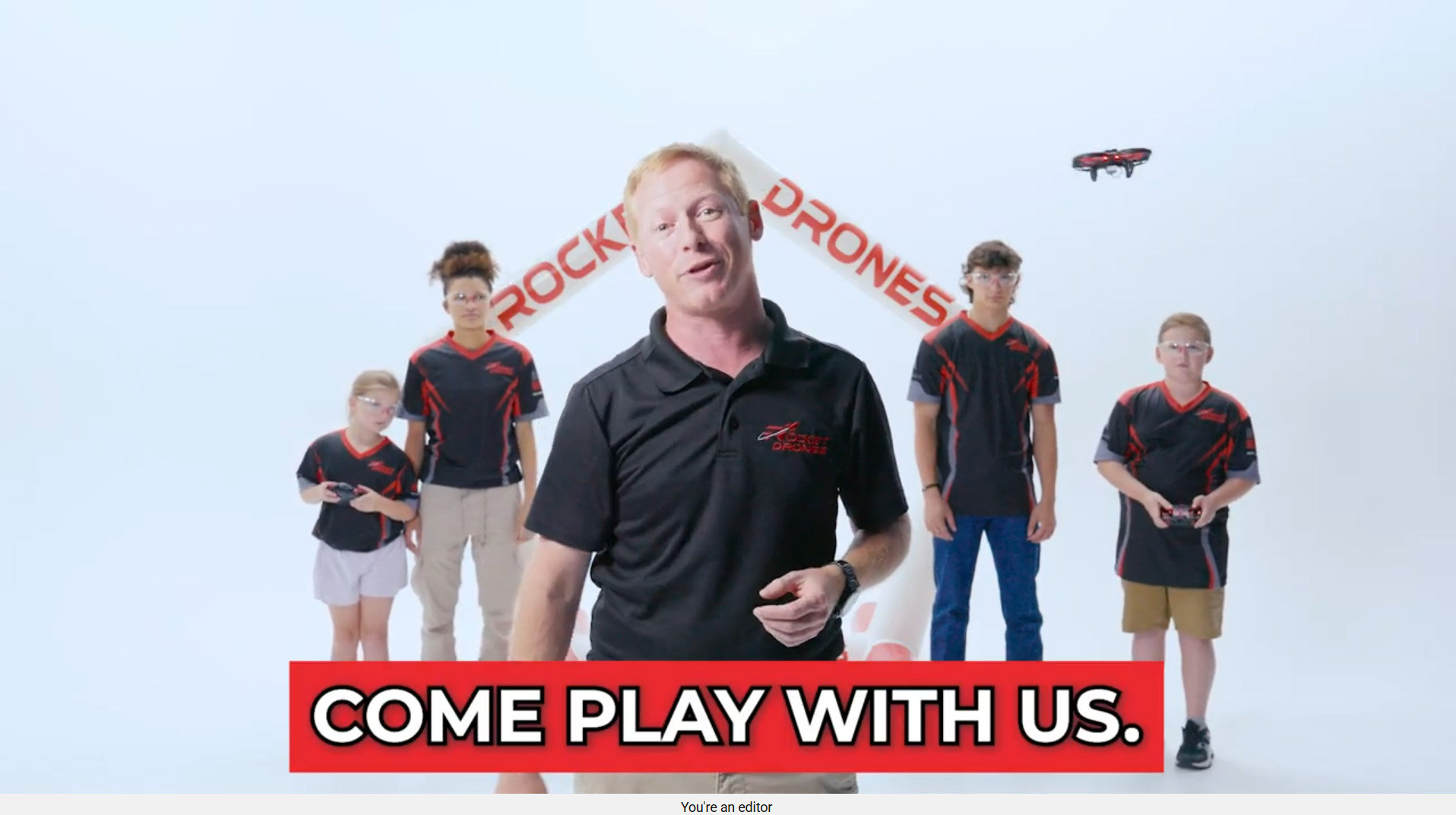
In this video, Brandon Turk explains a different approach. He speaks as an owner of Rocket Drones and as a working drone professional. This school drone program starts with real job requirements. Because the team does commercial drone work every day, they build training around the skills employers want. In contrast, generic programs often stop at basic flight exposure.
Built by working drone professionals
Rocket Drones takes a different path. Instead of centering hobby-grade equipment and classroom theory alone, the company built its program around commercial work. The team works in solar field inspection, infrastructure inspection, film and media production, agriculture, and mapping. That experience shapes the program from the start.
This matters for schools. Your students need more than current-looking content on paper. They need a clear progression toward career-ready performance. Because Rocket Drones works in the same fields students may enter, each training choice serves a practical goal.
Generic programs often teach students how to use drones. Rocket Drones, however, builds a drone education program around the skills, judgment, and progression that matter on real jobs. That contrast drives the whole model. In fact, the standard is simple. If a lesson does not help students move toward employability, it does not lead the program.
The commercial drone jobs students train for
The video ties training to real hiring sectors. Those sectors include solar field inspection, infrastructure and power station inspection, film and media production, agricultural mapping, land surveying, and search-and-rescue. Because these fields demand consistency, students must build control and judgment early.
Manual piloting sits at the center of the approach. Employers do not look for hobby familiarity alone. Instead, they want graduates who can fly with precision in real conditions. They also value field troubleshooting, clear documentation, and repeatable performance.
Manual flight skills separate a trained pilot from a hobbyist. That is the key point in this school drone program. For example, students do not just learn to get a drone in the air. They train to control it with purpose. As a result, the pathway connects classroom work to the kinds of tasks employers actually pay for.
STEM, CTE, and the path to Part 107
Rocket Drones connects classroom learning to a broader pathway. The program supports K-12 STEM instruction, while also fitting a CTE drone program built around employability. Since schools need both academic value and career relevance, that alignment matters.
Students move through a clear sequence:
- Learn core concepts through classroom drone curriculum.
- Build flight skills with hands-on training.
- Prepare for FAA Part 107 with focused certification study.
- Document flight hours to support hiring conversations after graduation.
Additionally, Rocket Drones reinforces that progression with classroom drone curriculum, training kits, and a racing simulator that supports skill development over time. Instead of asking schools to piece together separate purchases, Rocket Drones serves as a complete drone curriculum partner. Therefore, students can move from first flight to job-ready capability through one connected system.
Schools do not need more disconnected drone purchases. They need a complete pathway with measurable progress and career-ready outcomes. That is the difference this video shows. While many options offer equipment or isolated lessons, Rocket Drones built this school drone program with working professionals who train students for the same industries they serve every day.
-
uilt by working drone professionals, not classroom theory alone
Rocket Drones is led by professionals who work in commercial drone fields, not by teams removed from daily industry demands. That difference shapes the full program. Curriculum, training priorities, and student progression are all filtered through one standard: whether graduates will be employable in the sectors the founders work in every day.
-
Manual piloting and FAA Part 107 build employer-valued readiness
Manual piloting is treated as a core employability skill because it is what employers actually pay for in the field. FAA Part 107 preparation adds an important credential, but the program does not stop at test readiness. Students also build the flight control, judgment, and documented experience that help distinguish a graduate from a hobbyist.
-
A CTE pathway connects classroom hours to commercial drone careers
Rocket Drones frames drone education as a progression, not a one-time activity. Students move from classroom drone curriculum into a CTE pathway that supports skill development, certification preparation, and verified flight experience. That structure helps schools connect instruction to commercial drone careers with clearer long-term value for students and educators.
Frequently Asked Questions
What is a school drone program?
What makes a drone education program effective?
What commercial drone jobs do school drone programs prepare students for?
How does a school drone program connect to a CTE pathway?
How does FAA Part 107 fit into a school drone program?
Our school needs a drone program, but there are so many out there, I don't know where to start. Everything comes from Amazon and Walmart and the internet, and it all keeps falling apart.
Well, welcome to Rocket Drones. We're a bit unique here. Rocket Drones is actually owned by industry professionals who do the work every day — solar fields, movies, power stations. We teach your kids what they need to know to actually be employable in the jobs that we do. So if you're ready to get your school started with an outstanding drone training program, check out Rocket Drones.
Our Latest Videos

What's New in our Blog